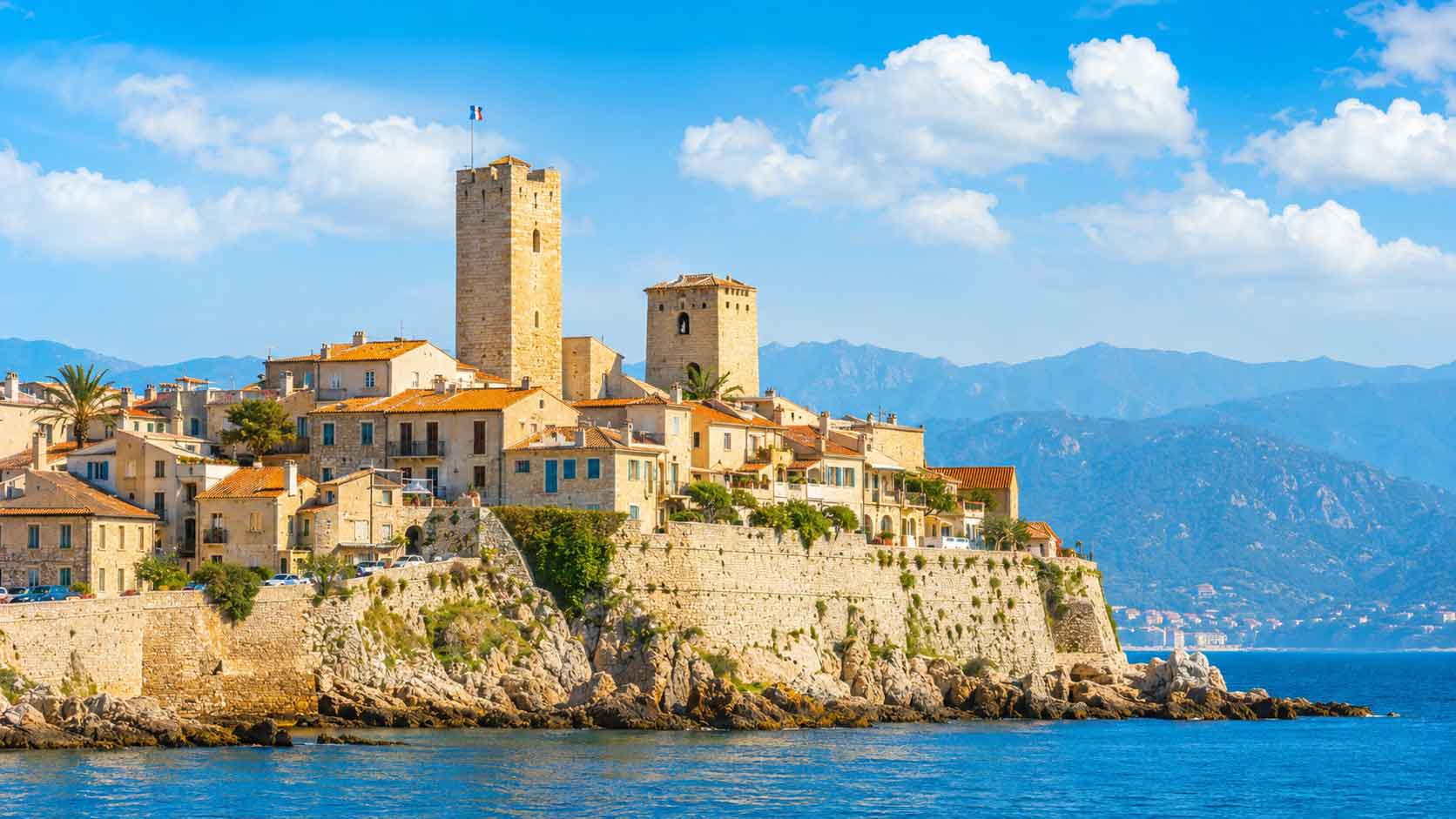
Antibes
Discover the best things to do in Antibes, a historic French Riviera city between Nice and Cannes: Old Antibes, the Picasso Museum, Fort Carré, the Provençal Market, Port Vauban, beaches and the Cap d’Antibes coastal trail.
Visiting Antibes means discovering one of the most varied destinations on the French Riviera. Located between Nice and Cannes, Antibes combines a historic walled old town, important art collections, Provençal markets, marinas, sandy beaches and the natural landscapes of Cap d’Antibes.
If you are looking for the best things to do in Antibes, beautiful places to see or an itinerary for visiting Antibes in one day, this SAVÙ travel guide will help you plan your stay. Discover Old Antibes, the Picasso Museum, Fort Carré, the Provençal Market, Port Vauban, the beaches, the Tirepoil coastal trail, the Garoupe Plateau and Juan-les-Pins.
Best Things to Do in Antibes
1. Explore Old Antibes
Old Antibes, known in French as the Vieil Antibes, is the historic heart of the city. Behind its ramparts lies a maze of narrow streets, small squares, historic houses, artists’ studios and independent shops. The neighborhood is easy to explore on foot without following a fixed route.
Enter the old town through the Porte Marine, then follow Rue de l’Horloge, Rue du Saint-Esprit or the passages around Cours Masséna. As you walk toward the sea, you will discover the cathedral, Château Grimaldi, the ramparts and several beautiful Mediterranean viewpoints.
Rue Sade, Rue Clémenceau, Rue Thuret, Rue James Close and Rue de la République contain numerous shops and restaurants. Boulevard d’Aguillon is also worth visiting, as its former military casemates now house artists and craftspeople.
SAVÙ tip: explore Old Antibes early in the morning to experience the market and quiet streets. Return toward the end of the day to see the evening light over the ramparts and enjoy dinner in the historic center.
2. Walk along the ramparts
The Antibes ramparts offer one of the most scenic urban walks on the French Riviera. Promenade Amiral-de-Grasse follows the coast between Bastion Saint-André, the Picasso Museum and the harbor.
From the fortifications, visitors can admire the Mediterranean, Cap d’Antibes and, in clear weather, the distant Alpine peaks. The walk also reveals the defensive architecture and historic houses of the old town.
The ramparts are particularly attractive at sunrise and shortly before sunset. Some sections may occasionally close because of events, maintenance work or weather conditions.
3. Visit the Picasso Museum
The Picasso Museum is housed inside Château Grimaldi overlooking the sea. Pablo Picasso worked here for several months in 1946 after the museum’s curator, Romuald Dor de la Souchère, offered him part of the building as a studio.
At the end of his stay, Picasso left several paintings and drawings in Antibes. Château Grimaldi officially became the Picasso Museum in 1966, making it the first museum dedicated to the artist.
The collections include works by Picasso, Nicolas de Staël, Hans Hartung, Anna-Eva Bergman and other modern and contemporary artists. The museum’s terrace displays sculptures and offers a beautiful view over the Mediterranean.
Allow approximately one or two hours for your visit. Check current opening hours, closing days and temporary exhibitions before arriving.
4. See Notre-Dame-de-la-Platea Cathedral
Located beside the Picasso Museum, Notre-Dame-de-la-Platea Cathedral is the principal religious building in Old Antibes. Antibes was the seat of a bishopric for several centuries before it was transferred to Grasse during the 13th century.
The cathedral’s colorful façade contrasts with the stone walls of Château Grimaldi and the neighboring tower. Inside, visitors can see the altarpiece of the Virgin of the Rosary painted by Louis Bréa in 1513, along with other religious works.
Access may vary according to services and events. Visitors should dress appropriately and remain quiet inside the building.
5. Visit the Provençal Market
Located beneath the covered market hall on Cours Masséna, the Provençal Market is one of the liveliest places in Antibes. Its stalls sell fruit, vegetables, cheese, olives, spices, flowers and regional Mediterranean products.
The food market takes place in the morning. It usually operates daily during summer, while Monday is generally a closing day during part of the low season. Opening days and times may change, so check the municipal information before visiting.
Use the opportunity to taste socca, pissaladière, olive products and other Provençal or Niçois specialties sold around the market.
Depending on the season, the covered hall may welcome artists and craftspeople during the afternoon and evening.
6. Wander through the Safranier district
The Free Commune of Safranier is a small flower-filled neighborhood inside Old Antibes, between Rue de la Tourraque and Rue du Haut Castelet. Its quiet lanes, colorful façades and plant-covered houses create a village atmosphere away from the busier shopping streets.
The neighborhood preserves the memory of Greek writer Níkos Kazantzákis, who lived in Antibes. It also contains artists’ studios and Villa Fontaine, which is used as a residence for visiting artists.
Safranier is small and can be explored quickly, but it is worth visiting for its architecture, flowers and peaceful character.
7. See Port Vauban and the Nomade sculpture
Port Vauban is one of the major marinas on the Mediterranean. Its historic section lies beneath the ramparts, while Quai Camille-Rayon, often called the Billionaires’ Quay, accommodates some of the world’s largest yachts.
At the end of the harbor, Bastion Saint-Jaume provides an impressive view over the boats, Fort Carré and Old Antibes. It is also home to Nomade, a monumental white sculpture made from letters by Spanish artist Jaume Plensa.
Visitors may be able to walk inside the sculpture and observe the city and sea through its open structure. Access can depend on opening hours and safety conditions.
Walking around the harbor is free and especially enjoyable in the early morning or evening.
8. Visit Fort Carré
Fort Carré was constructed by order of King Henry II during the middle of the 16th century. It is one of the earliest examples of bastioned fortification in France and once protected Antibes, which was the last French port before the border with the County of Nice.
Contrary to a common misconception, Fort Carré was not built by Vauban. However, Vauban introduced improvements to its defenses toward the end of the 17th century.
The monument stands on a small peninsula surrounded by a protected natural area. From its elevated position, visitors can enjoy panoramic views of the harbor, the ramparts, the old town and the Mediterranean.
Depending on the period, the fort may be accessible independently or only as part of a guided visit. Advance booking can be recommended, and the site may close during bad weather. Check the current conditions before traveling there.
9. Relax on Gravette Beach
Gravette Beach is the closest beach to Old Antibes. Located between the ramparts and Port Vauban, it is easily accessible on foot from the historic center.
This small sandy beach is protected by the harbor walls, which generally reduce the strength of the waves. It is a convenient option for travelers wishing to combine sightseeing and swimming during the same day.
The beach can become crowded during summer. Arrive early and follow any local instructions concerning supervision, swimming conditions and water quality.
10. Swim at Ponteil and Salis beaches
Following the coast from Old Antibes toward Cap d’Antibes, you will reach the long sandy beaches of Ponteil and Salis. Both provide beautiful views of the old town, ramparts and mountains.
The shallow water makes these beaches particularly popular with families. Lifeguard stations and other facilities are available during parts of the summer season, but services depend on the time of year.
Salis Beach is also a convenient starting point for walking up to the Garoupe Plateau along the Chemin du Calvaire.
11. Walk along the Tirepoil coastal trail
The Tirepoil trail, also known as the Cap d’Antibes coastal path or customs officers’ path, follows the rocky coastline between Garoupe Bay and the area surrounding Villa Eilenroc.
The route crosses a Mediterranean landscape of cliffs, pine trees, small coves and clear water. It also provides views of the cap’s villas and a coastline that feels much wilder than central Antibes or Juan-les-Pins.
Although the distance is manageable, the trail includes steps, rocky sections and areas exposed to direct sunlight. Wear proper footwear, carry drinking water and avoid the hottest part of the day.
The trail may be partially or completely closed because of high waves, bad weather, maintenance or cliff stabilization work. Always check the official status before leaving and never cross a closed barrier.
12. Climb to the Garoupe Plateau
The Garoupe Plateau overlooks Cap d’Antibes. It can be reached by road or on foot from the Salis area along the Chemin du Calvaire.
The site includes the Garoupe Lighthouse, Notre-Dame-de-la-Garoupe Chapel, a naval signal station and several viewpoints. In clear weather, the panorama extends across the coast, the Alps and a wide section of the Mediterranean.
The chapel is known for the votive offerings left by sailors. The lighthouse and chapel are not necessarily open every day, so check the current visiting arrangements.
13. Discover the Villa Thuret Botanical Garden
The Villa Thuret Botanical Garden is a scientific research site dedicated to the study and acclimatization of Mediterranean and exotic plants. It was created during the 19th century by French botanist Gustave Thuret.
The garden contains a diverse collection of trees and plants that contributed to the development of the distinctive horticultural landscape of the French Riviera.
It is generally accessible on weekdays, but opening times can change. Check the latest information from INRAE or the tourist office before visiting.
14. Spend the evening in Juan-les-Pins
Juan-les-Pins is the seaside resort belonging to the commune of Antibes. It is known for its sandy beaches, restaurants, terraces, shops and lively summer atmosphere.
Walk around the Pinède Gould, follow the Promenade du Soleil and explore the streets close to the waterfront. Handprints installed around the pine grove commemorate the famous musicians associated with the Jazz à Juan festival.
Juan-les-Pins is particularly pleasant toward the end of the day, when temperatures become cooler and the waterfront restaurants begin to fill.
The History of Antibes
The history of Antibes extends back approximately 2,400 years. The ancient settlement was known as Antipolis, a name generally interpreted as “the city opposite.” Its location between the Mediterranean, coastal routes and the surrounding hinterland gave it considerable strategic importance.
Following antiquity, the town experienced periods of invasion, conflict and political transformation. Antibes was also the seat of a bishopric between the 5th and 13th centuries.
For several centuries, its proximity to the border with the County of Nice strengthened its military role. The construction of Fort Carré and the development of the ramparts transformed Antibes into an important fortified town protecting the Kingdom of France.
During the 19th century, Antibes began to expand beyond its defensive walls. Part of the fortifications was removed to allow new neighborhoods to develop. Juan-les-Pins later emerged as a seaside resort toward the end of the century.
Antibes attracted numerous artists and writers, including Claude Monet, Pablo Picasso, Nicolas de Staël, Jacques Prévert, Graham Greene and Níkos Kazantzákis. This artistic legacy remains visible in the city’s museums, studios and landscapes.
Best Beaches in Antibes
Gravette Beach
Choose Gravette Beach if you want to swim close to Old Antibes. It is a small sandy beach protected by the harbor structures.
Ponteil Beach
Ponteil Beach offers sand, generally shallow water and a beautiful view of the old town. It is popular with families and within walking distance of the historic center.
Salis Beach
Salis Beach continues along the coast from Ponteil toward Cap d’Antibes. It is a good place to swim before or after walking to the Garoupe Plateau.
Garoupe Beach
Located on Cap d’Antibes, Garoupe Beach contains both public and private sections. It can be combined with a walk along the Tirepoil coastal trail.
Juan-les-Pins beaches
The sandy beaches of Juan-les-Pins extend along the seaside resort toward Golfe-Juan. They are surrounded by restaurants, private beach clubs and seasonal services.
Coves of Cap d’Antibes
Cap d’Antibes contains several small beaches and rocky coves. Some are unsupervised or difficult to access. Remain cautious, check sea conditions and avoid sitting too close to the waves.
How to Explore Cap d’Antibes
Cap d’Antibes is a peninsula between Antibes and Juan-les-Pins. It is known for its natural landscapes, villas, gardens, small beaches and historic properties.
For a first visit, begin at Salis Beach and climb to the Garoupe Plateau. Continue toward Garoupe Beach and follow the Tirepoil trail if the route is open.
Visitors traveling by car or bicycle can follow part of the coastal road toward Juan-les-Pins. However, some roads are narrow and busy, with limited space for stopping.
To avoid traffic and parking difficulties, use local buses whenever the schedule suits your itinerary.
Best Things to Do in Juan-les-Pins
- Relax on the sandy beaches and try water sports.
- Walk along the Promenade du Soleil.
- Discover the Pinède Gould and the musicians’ handprints.
- Attend the Jazz à Juan festival when it takes place.
- See the seaside villas and resort architecture.
- Dine at a restaurant near the Mediterranean.
- Enjoy the shops, terraces and seasonal evening entertainment.
Juan-les-Pins belongs to the commune of Antibes but has a distinct seaside identity. Old Antibes is better suited to history, culture and sightseeing, while Juan-les-Pins is especially popular for beaches and evening entertainment.
How to Visit Antibes in One, Two or Three Days
Visiting Antibes in one day
Begin your morning at the Provençal Market before exploring the streets of Old Antibes. See the cathedral and allow one or two hours for the Picasso Museum.
After lunch, walk along the ramparts toward Port Vauban and the Nomade sculpture. Afterwards, return to Gravette Beach or continue toward Ponteil and Salis beaches.
Finish your day in Juan-les-Pins with a walk along the waterfront and dinner near the beach.
Visiting Antibes in two days
Devote your first day to Old Antibes, the Provençal Market, the Picasso Museum, the ramparts, Port Vauban and Fort Carré.
Use the second day to explore Cap d’Antibes. Visit the Garoupe Plateau, walk along the Tirepoil trail if conditions permit, then discover the beaches and Juan-les-Pins.
Visiting Antibes in three days
With a third day, visit the Villa Thuret Botanical Garden, spend more time on the beaches or discover the smaller museums and artists’ studios.
You can also arrange a day trip to Biot, Vallauris, Cannes or one of the hilltop villages in the surrounding area.
Best Time to Visit Antibes
- Spring offers pleasant temperatures for exploring the old town, walking along the coast and visiting gardens.
- Summer brings a lively atmosphere and a full selection of seaside activities, but beaches, roads and parking areas are busier.
- Early fall often provides warm sea temperatures with gradually decreasing visitor numbers.
- Winter is quieter and suitable for museums, heritage sites and coastal walks during favorable weather.
May, June, September and early October generally provide a good balance of comfortable weather, swimming conditions and visitor numbers. July and August are better for travelers seeking a lively summer atmosphere.
How to Get to Antibes
Getting to Antibes by train
Antibes railway station is located close to Old Antibes and Port Vauban. Regional trains connect the city with Nice, Cannes, Monaco, Menton and other destinations along the French Riviera.
Juan-les-Pins has its own railway station serving the seaside resort. Traveling by train is often the easiest option during summer, when road traffic becomes heavier.
Getting to Antibes by car
Antibes is accessible from the A8 motorway and the coastal roads connecting Nice and Cannes. Expect congestion around the main approaches during the high season and peak commuting hours.
If you are only visiting the historic center, park outside Old Antibes and continue on foot.
Getting to Antibes from Nice Airport
Nice Côte d’Azur Airport is located relatively close to Antibes. Depending on the time of day, you can reach the city by bus, train with an appropriate connection, taxi, private transfer or rental car.
Check current routes and schedules on the day of travel, as services may change according to the season.
Parking and Getting Around Antibes
Several parking facilities are located around Old Antibes, Port Vauban, the city center and the beaches. Spaces near the coastline fill quickly during summer.
Arrive early if you want to park near the market or beaches. Check prices, height restrictions and opening hours before entering a parking facility.
Old Antibes can be explored entirely on foot. Local buses connect Juan-les-Pins, Cap d’Antibes and other areas of the commune.
Parking is available near Garoupe Beach for the Tirepoil trail, but capacity is limited. Never park on private property or in a location that obstructs traffic or emergency access.
Where to Stay and Eat in Antibes
Staying in Old Antibes
Choose the historic center if you want to reach restaurants, museums, the market, harbor and Gravette Beach on foot. The atmosphere is lively, especially during summer.
Staying in Juan-les-Pins
Juan-les-Pins is suitable for travelers looking for sandy beaches, a seaside atmosphere, restaurants and evening entertainment.
Staying on Cap d’Antibes
Cap d’Antibes offers a quieter and more residential environment with hotels, villas and luxury properties. Depending on your location, you may need a car, bicycle or local bus.
What to eat in Antibes
Look for Mediterranean fish, Provençal vegetables, socca, pissaladière, pan bagnat, olive products and traditional Niçois dishes. The area surrounding the Provençal Market is particularly convenient for sampling local specialties.
In busy tourist areas, check menus and prices before choosing a table. Dinner reservations are recommended during summer and on weekends.
Places to Visit Around Antibes
- Biot: an artists’ village known for glassmaking and the Fernand Léger National Museum.
- Vallauris: a town associated with ceramics and the artistic history of Pablo Picasso.
- Cannes: famous for La Croisette, the Palais des Festivals, Le Suquet and its beaches.
- Nice: the largest city on the French Riviera, with the Promenade des Anglais, Old Nice and numerous museums.
- Cagnes-sur-Mer: home to the hilltop village of Haut-de-Cagnes, the Renoir Museum and a Mediterranean waterfront.
- Saint-Paul-de-Vence: a fortified village known for its galleries and artistic heritage.
- Grasse: the historic perfume capital located in the hills above the coast.
- Mougins: a hilltop village appreciated for its lanes, restaurants and galleries.
- Lérins Islands: Mediterranean islands accessible by boat from Cannes, known for walking trails and historic sites.
Antibes is an excellent base for exploring the French Riviera by train. Nice, Cannes and several other coastal destinations can be visited without a car.
Tips for Visiting Antibes Responsibly
- Use trains and public transportation whenever possible.
- Respect protected areas and remain on authorized trails.
- Never cross a barrier closing the coastal path.
- Take all rubbish with you and reduce single-use plastic.
- Use official access points when visiting beaches and coves.
- Avoid anchoring boats over protected seagrass meadows.
- Respect the quiet residential areas of Cap d’Antibes.
- Support local producers, craftspeople and independent businesses.
- Conserve water, especially during periods of drought.
- Check weather warnings before walking along the coastline.
Frequently Asked Questions About Antibes
Is Antibes worth visiting?
Yes. Antibes combines historic architecture, art museums, markets, marinas, beaches and natural landscapes. It is suitable for both a day trip and a longer stay.
How long do you need to visit Antibes?
One day is enough to see Old Antibes, the market, Picasso Museum, ramparts and Port Vauban. Allow two days to add Cap d’Antibes, the Tirepoil trail and Juan-les-Pins.
Can you explore Antibes on foot?
Yes. Old Antibes, Port Vauban, Gravette Beach, Ponteil Beach and Salis Beach are accessible on foot. To explore the entire Cap d’Antibes and Juan-les-Pins, use buses, a bicycle or a car.
What is the difference between Antibes and Juan-les-Pins?
Antibes and Juan-les-Pins belong to the same commune. Antibes contains the historic center, ramparts, museums and large marina, while Juan-les-Pins is better known for its beaches, restaurants and seaside atmosphere.
What is the best beach in Antibes?
Gravette Beach is convenient for the historic center. Ponteil and Salis are suitable for families, while the beaches and coves of Cap d’Antibes offer a more natural setting.
Is the Cap d’Antibes coastal trail difficult?
The Tirepoil trail is manageable for regular walkers, but it includes steps and rocky sections. Proper footwear is essential. Avoid the route during extreme heat, bad weather or high waves.
Is the Picasso Museum in Antibes worth visiting?
Yes. It occupies Château Grimaldi, where Picasso worked in 1946. Its collections, sculpture terrace and Mediterranean views make it one of the most important museums on the French Riviera.
Where can you watch the sunset in Antibes?
Juan-les-Pins and the western side of Cap d’Antibes provide excellent sunset views. The ramparts and Port Vauban are also particularly attractive toward the end of the day.
Can you visit Antibes without a car?
Yes. Antibes has convenient railway connections, and the historic center is easy to explore on foot. Local buses serve Juan-les-Pins, the beaches and several areas of Cap d’Antibes.
What can you do in Antibes for free?
You can explore Old Antibes, walk along the ramparts, visit the Provençal Market, see the Nomade sculpture, walk around Port Vauban, enjoy the public beaches and follow the coastal trail whenever it is open.
Is Antibes suitable for families?
Yes. Ponteil and Salis beaches, the harbor promenade, the market and the streets of the historic center are suitable for families. At the pebble beaches east of Fort Carré, the water becomes deep quickly and requires additional caution.
What is the best day to visit the Provençal Market?
The market is most enjoyable during the morning. It normally operates every day in summer but is generally closed on Mondays during part of the low season. Check the municipal schedule before visiting.
City Gallery