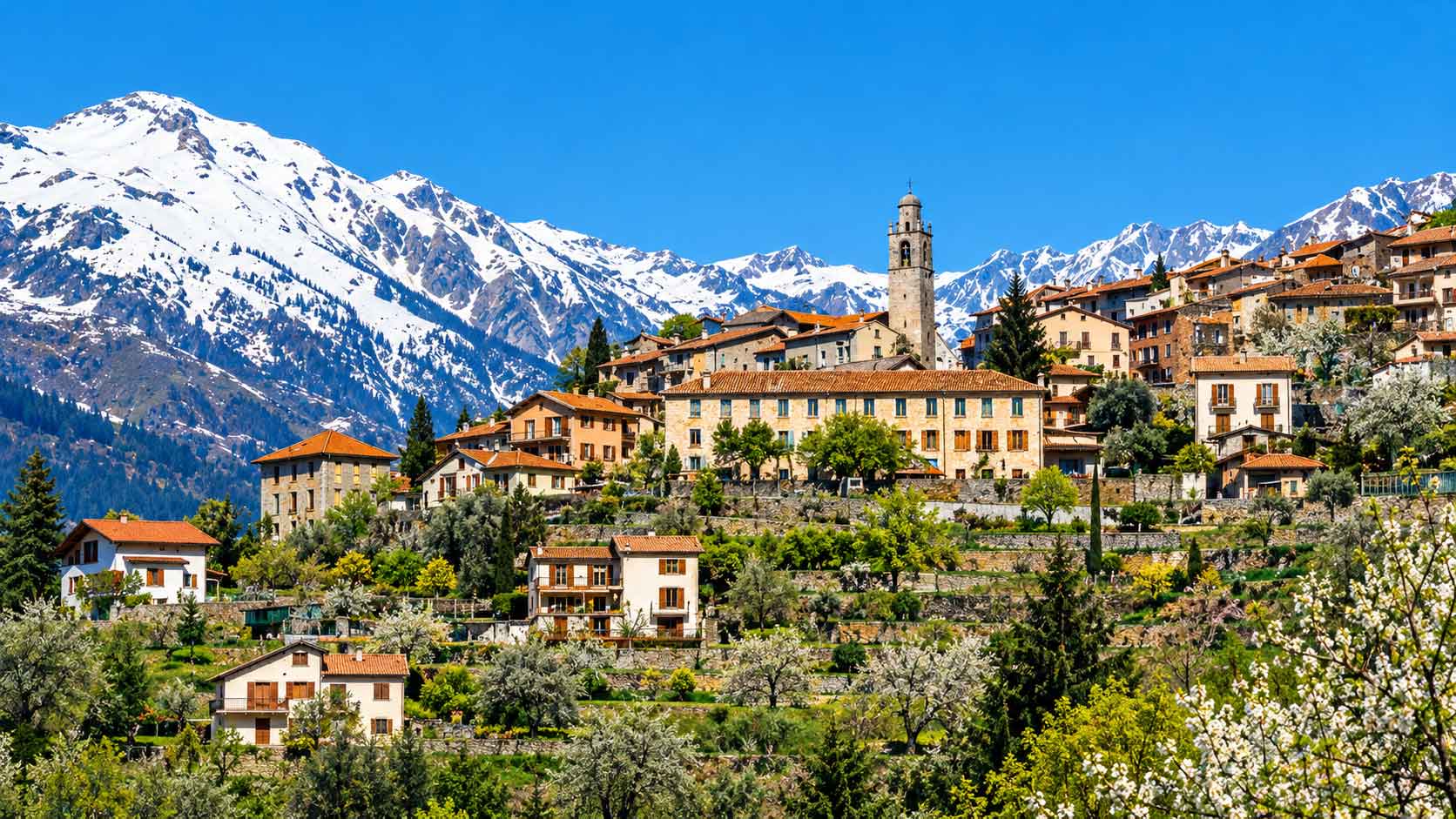
Belvédère
Discover Belvédère, a historic mountain village overlooking the Vésubie Valley and the gateway to the wild Gordolasque Valley, Mercantour National Park and the prehistoric rock engravings of the Vallée des Merveilles.
Belvédère Travel Guide: A Mountain Village at the Gateway to the Mercantour
Belvédère is a historic mountain village in the Alpes-Maritimes, perched approximately 838 metres above sea level and overlooking the Vésubie Valley. Located opposite Roquebillière and north of Nice, the village is known for its panoramic setting, traditional Alpine architecture, Baroque church and privileged access to the Gordolasque Valley and Mercantour National Park.
Belvédère is much more than a stop on the way to the mountains. Its narrow streets, shaded squares, old fountains, chapels and tall stone houses reveal the history of a community shaped by agriculture, livestock farming, religious traditions and life in the Southern Alps.
A few kilometres beyond the village, the landscape becomes wilder as the road enters the Gordolasque Valley. This spectacular glacial valley provides access to waterfalls, mountain lakes, the Refuge de Nice and hiking routes towards the Vallée des Merveilles, one of Europe’s most important prehistoric rock-art areas.
In this Belvédère travel guide:
- Best things to do in Belvédère
- Explore the historic village
- Enjoy the panoramic views
- Church of Saint-Pierre-et-Saint-Paul
- The chapels of Belvédère
- Visit the Milk Museum
- Discover the Gordolasque Valley
- Pont du Countet
- Hiking around Belvédère
- Hike to the Refuge de Nice
- Vallée des Merveilles
- Wildlife and nature
- What to eat in Belvédère
- Best time to visit
- How to get to Belvédère
- Getting there by public transport
- Parking and getting around
- One-day itinerary
- Places to visit nearby
- Frequently asked questions
Best Things to Do in Belvédère
1. Explore the Historic Village
Begin your visit in the old centre of Belvédère, where narrow lanes, stairways and covered passages climb between traditional stone houses. Many buildings are tall and narrow, with drying spaces beneath their tiled roofs, a characteristic feature of Alpine and Piedmontese architecture.
The village can be explored without following a fixed itinerary. Walk through Rue Victor Maurel, Rue du Perrier, Rue du Paraire and the streets surrounding Place des Tilleuls. Along the way, look for old doorways, stone arches, fountains, drinking troughs and traces of the traditional workshops that once supported village life.
Rue du Paraire was historically associated with water-powered mills, forges and workshops. Grain was ground into flour, woollen fabrics were processed in fulling mills and local blacksmiths made and repaired tools for farmers and fitted shoes to horses, donkeys and mules.
The old lanes are steep and occasionally uneven. Comfortable shoes are recommended, and visitors should allow time to stop at the small squares and viewpoints.
2. Enjoy the Panoramic Views
The name Belvédère is traditionally associated with the idea of a beautiful viewpoint, and the village lives up to its name. Its elevated position offers wide views over the Vésubie Valley, Roquebillière, the surrounding forests and the mountains of the Mercantour.
Some of the best views appear along the roads and pedestrian paths around the edge of the historic centre. Morning light is particularly attractive for photographing the mountains, while the late afternoon sun illuminates the opposite side of the valley.
Weather conditions can change quickly in the mountains. Clouds, rain or mist may arrive even when the coast is sunny, so bring a light waterproof layer.
3. Visit the Church of Saint-Pierre-et-Saint-Paul
The Church of Saint-Pierre-et-Saint-Paul is the principal monument in Belvédère. Built in the Baroque style, the church dates mainly from the seventeenth century and is distinguished by its square bell tower constructed with blocks of tuff stone and topped by a small lantern.
Inside, visitors can discover a carved wooden high altar, paintings, statues, religious objects and other pieces of historic Baroque furniture. The church reflects the artistic and religious traditions shared by the villages of the former County of Nice and the Alpine valleys.
Access may be available through a guided heritage visit or by contacting the local tourist information office. Opening hours are not always regular, particularly outside the main visitor season.
4. Follow the Chapels of Belvédère
Several historic chapels are located in and around Belvédère. Together, they illustrate the religious traditions of the village and the importance of protective saints in rural Alpine life.
The heritage route may include:
- Chapelle Saint-Antoine, believed to have medieval origins and associated with representations of different saints named Anthony.
- Chapelle Saint-Roch, dedicated to a saint traditionally invoked for protection against plague and epidemics.
- Chapelle Saint-Blaise, located beside the road leading towards the Gordolasque Valley.
- Chapelle Notre-Dame-de-Fenestre du Planet, traditionally dated to the eighteenth century.
- Chapelle Saint-Grat, situated farther into the Gordolasque Valley.
The chapels are not necessarily open every day, but their exteriors and surrounding landscapes can be appreciated during a walk. Information about the heritage circuit is available from the Belvédère tourist information office.
5. Visit the Milk Museum
The Musée du Lait, or Milk Museum, occupies a former grain mill connected with the village’s old dairy cooperative. The cooperative was created in the early twentieth century to collect milk from local farmers and organise its transport and sale.
Some of the milk was also used locally to produce butter and cheese. As families gradually left the village and the number of cattle decreased, the cooperative eventually closed.
The museum now presents traditional equipment used for milking, butter making and cheese production, together with objects related to livestock farming and pastoral life. Visits may be arranged through the tourist information office, and groups are normally asked to book in advance.
Discover the Gordolasque Valley
The Gordolasque Valley begins above Belvédère and extends for approximately 12 kilometres into the mountains of Mercantour National Park. It is one of the wildest and most beautiful valleys in the Alpes-Maritimes.
The landscape was shaped by glaciers and includes rocky peaks, waterfalls, larch forests, Alpine meadows, mountain streams and high-altitude lakes. The Gordolasque River flows through the valley before joining the Vésubie.
A narrow mountain road climbs from Belvédère through the valley. Along the way, visitors can stop near traditional hamlets, the Chapelle Saint-Grat, the Cascade du Ray and several starting points for walks and mountain hikes.
The road may be affected by snow, storms, maintenance work or temporary restrictions. Always check current access conditions before travelling, especially outside the summer season.
The Belle et Sébastien Cabin
The Gordolasque Valley is associated with the television and film world of Belle et Sébastien. A traditional mountain cabin connected with filming can be seen in the valley and has become a popular photographic stop.
The cabin stands in a natural landscape rather than an organised theme park. Visitors should respect the site, grazing animals, private property and the fragile mountain environment.
Pont du Countet
Pont du Countet is located near the end of the Gordolasque road and serves as the starting point for several major hiking routes. From here, marked paths lead into the heart of Mercantour National Park towards mountain lakes, the Refuge de Nice, the Pas de l’Arpette and the Vallée des Merveilles.
The Countet parking area can become extremely busy on summer weekends. Arrive early, never park outside authorised spaces and check whether a seasonal shuttle or traffic regulation is operating.
There are few services at the end of the valley. Carry water, food, warm clothing, sun protection and everything required for your chosen route.
Hiking Around Belvédère
Belvédère offers walks for different levels, from short heritage circuits near the village to demanding full-day routes in high mountains.
The Planet Circuit
The Planet circuit is an accessible walk beginning in Belvédère. It climbs through gardens and irrigation channels towards the heights above the village before passing historic chapels and returning to the centre.
The route is approximately one hour long, with around 150 metres of elevation gain. It is a good choice for visitors who want a short walk combining views, rural heritage and village history.
The Forgotten Chapel Trail
The Forgotten Chapel Trail links several religious buildings and rural heritage sites around Belvédère. It provides an interesting alternative to a purely mountain-focused visit and allows walkers to understand the traditional spiritual life of the village.
Walks in the Gordolasque Valley
Several easier walks begin along the Gordolasque road or near Pont du Countet. Visitors can follow sections of the river, discover waterfalls and enjoy the Alpine scenery without completing a high-altitude circuit.
Choose a route suited to your experience and check its current condition. Mountain paths may retain snow well into spring and can be damaged after storms or heavy rainfall.
Hike to the Refuge de Nice
The Refuge de Nice, also known as the Refuge Victor de Cessole, is one of the principal mountain refuges accessible from the Gordolasque Valley. It stands above the Lac de la Fous in a spectacular high-mountain setting.
The hike normally begins at Pont du Countet and follows a marked route through the upper valley. It is a demanding mountain walk involving significant elevation gain, rocky terrain and several hours of hiking.
The refuge provides accommodation and meals when staffed, but reservations are strongly recommended. Opening dates depend on weather and snow conditions.
Even in summer, hikers should carry warm and waterproof clothing. Afternoon thunderstorms are possible, so beginning early is strongly advised.
Vallée des Merveilles
The Vallée des Merveilles is one of the most important prehistoric rock-art sites in Europe. Located above 2,000 metres around Mont Bégo, the protected archaeological area contains thousands of engravings created during different periods, including the Copper and Bronze Ages.
From the Gordolasque Valley, experienced hikers can reach the Merveilles sector by climbing from Pont du Countet towards the Pas de l’Arpette and then descending towards the Refuge des Merveilles.
This is a long and demanding mountain route, normally requiring around four hours to reach the refuge in suitable conditions. Many visitors organise an overnight stay rather than attempting a rushed return journey on the same day.
Special regulations protect the engraved rocks:
- Remain on authorised marked paths.
- Do not touch or walk on the engravings.
- Metal-tipped walking poles are prohibited in the protected engraving area.
- Bivouacking is allowed only in designated locations.
- Access to certain sectors is possible only with an authorised guide.
A guided visit is the best way to understand the meaning, history and archaeological importance of the engravings.
Wildlife and Nature
The Gordolasque Valley and Mercantour National Park are home to an exceptional variety of mountain wildlife. Patient visitors may observe chamois, marmots and Alpine ibex, particularly in quieter areas and during the morning or evening.
The valley also supports birds of prey, insects and a diverse range of Alpine plants. Wildlife must never be approached or fed. Dogs are subject to specific regulations in the national park and may be prohibited in the protected core area, even when kept on a lead.
Stay on marked paths, carry all rubbish back with you and avoid disturbing grazing livestock. Close gates after passing through them and keep a safe distance from herds and shepherd dogs.
What to Eat in Belvédère
Food in the Vésubie Valley reflects the traditions of both Nice and the Southern Alps. Mountain cuisine is generally simple and generous, based on seasonal vegetables, cheese, meat, herbs and products that could historically be preserved during winter.
Regional specialities may include:
- Local cow, sheep or goat cheese
- Brous, a fresh regional cheese traditionally connected with pastoral festivals
- Tourte de blettes, a sweet or savoury chard pie
- Ravioli and fresh pasta influenced by nearby Piedmont
- Daube provençale with polenta or pasta
- Soupe au pistou during the summer
- Mountain honey
- Blueberry tarts and seasonal fruit desserts
The choice of restaurants and shops is limited, especially outside the summer season. Check opening times in advance and carry food if you plan to continue into the Gordolasque Valley.
Best Time to Visit Belvédère
Late spring brings green landscapes, flowing waterfalls and wildflowers. However, snow may remain on high-altitude trails, so mountain routes should be checked carefully.
Summer is the main season for hiking in the Gordolasque Valley and visiting the high mountains. Begin walks early to avoid heat, afternoon storms and crowded parking areas.
Early autumn offers cooler walking conditions, colourful vegetation and fewer visitors. Refuge services and seasonal transport may become limited as the season progresses.
Winter gives the valley a dramatic Alpine atmosphere, but snow, ice and road closures can affect access. High-altitude outings require winter-mountain experience and appropriate equipment.
How to Get to Belvédère
From Nice
Belvédère is located approximately 55 to 60 kilometres north of Nice. The drive usually takes around 1 hour 15 minutes to 1 hour 35 minutes, depending on traffic and road conditions.
Follow the M6202 north from Nice, then take the road into the Vésubie Valley towards Lantosque and Roquebillière. From the valley road, follow the signs climbing towards Belvédère.
From Monaco
From Monaco, allow approximately 1 hour 35 minutes to 2 hours by car. A common route follows the A8 towards Nice, then continues north through the Var and Vésubie valleys.
Traffic around Nice and road conditions in the mountains can significantly increase the journey time.
From Saint-Martin-Vésubie
Belvédère is around 15 to 20 minutes by car from Saint-Martin-Vésubie. The two villages can easily be included in the same itinerary.
From Roquebillière
Roquebillière lies directly across the Vésubie Valley from Belvédère. The road journey usually takes approximately 10 to 15 minutes.
Driving to the Gordolasque Valley
From the centre of Belvédère, follow the signs for Vallée de la Gordolasque and Pont du Countet. The mountain road continues for approximately 12 kilometres.
The road is narrow and winding in places. Drive slowly, watch for cyclists, hikers and animals, and do not park outside authorised areas.
Getting There by Public Transport
Belvédère can be reached by public transport, but connections are limited and should be carefully planned.
- Line 90 connects the Nice area with the Vésubie Valley, including Lantosque and Roquebillière.
- Line 93 connects Lantosque with Belvédère, terminating at Belvédère Place Pavy.
- Some journeys require a connection between lines 90 and 93.
- Seasonal services or shuttles may operate towards the Gordolasque Valley during part of the summer.
Services may be infrequent, particularly on Sundays, public holidays and outside the summer season. Check the current Lignes d’Azur timetable and the time of the last return service before leaving.
Public transport is suitable for visiting the village, but access to Pont du Countet and the hiking areas may require a seasonal shuttle, taxi or private vehicle.
Parking and Getting Around
Public parking areas are located around the entrances to the village. Park outside the narrow historic centre and continue on foot, as the old streets are steep and unsuitable for through traffic.
Additional parking is available at several points in the Gordolasque Valley, including near major hiking departures. The Pont du Countet parking area fills quickly during the summer.
Arrive early, respect all traffic signs and never block the road, emergency access, private driveways or turning areas.
The centre of Belvédère contains stairways, steep slopes and uneven surfaces. Some streets may be difficult for visitors with reduced mobility or families using pushchairs.
One-Day Itinerary in Belvédère
Morning
Begin at Place des Tilleuls and walk through the historic centre. Explore Rue Victor Maurel, Rue du Perrier and Rue du Paraire, stopping at the fountains, old workshops and panoramic viewpoints.
Visit the Church of Saint-Pierre-et-Saint-Paul if it is open, then continue towards the Chapelle Saint-Antoine and other heritage sites around the village.
Lunch
Have lunch in Belvédère or prepare a picnic using products from the Vésubie Valley. Confirm restaurant opening times in advance, particularly outside July and August.
Afternoon
Drive into the Gordolasque Valley, stopping near the Chapelle Saint-Grat, the Cascade du Ray and the Belle et Sébastien cabin. Continue towards Pont du Countet if the road is open.
Take a short walk beside the river or follow a suitable marked trail. Return before dark, allowing enough time for the winding mountain road.
Places to Visit Near Belvédère
Roquebillière
Roquebillière is located across the Vésubie Valley and is known for its mountain setting, historic religious heritage and nearby thermal district of Berthemont-les-Bains.
Saint-Martin-Vésubie
Saint-Martin-Vésubie is one of the principal villages of the Mercantour. Its historic streets, mountain architecture and location between the Boréon and Madone de Fenestre valleys make it an excellent base for outdoor activities.
La Bollène-Vésubie
La Bollène-Vésubie is a picturesque village built on a wooded hillside. It also provides access towards the Col de Turini and the historic Authion massif.
Le Boréon
The Boréon Valley offers mountain lakes, forests, hiking trails and winter activities. It is located above Saint-Martin-Vésubie.
Col de Turini and the Authion
The Col de Turini and Authion massif combine dramatic mountain scenery with military history. Forts and defensive structures recall the strategic importance of this border region.
Utelle
Utelle is another historic village overlooking the Vésubie Valley. It is known for its stone streets and the mountain sanctuary of the Madone d’Utelle.
Frequently Asked Questions About Belvédère
Is Belvédère worth visiting?
Yes. Belvédère combines a historic mountain village, panoramic views, Baroque heritage and direct access to the Gordolasque Valley and Mercantour National Park.
How much time do you need in Belvédère?
Allow two to three hours for the village alone. A full day is recommended if you also want to explore the Gordolasque Valley. Major mountain hikes require an additional day or an overnight stay.
Can you visit Belvédère without a car?
Yes, but careful planning is required. Buses connect the Vésubie Valley with Nice, while line 93 serves Belvédère from Lantosque. Reaching the upper Gordolasque Valley without a car is more difficult outside the seasonal shuttle period.
Is Belvédère suitable for families?
The village and shorter walks are suitable for families accustomed to steep streets. The Gordolasque Valley also offers scenic stops and easy walks, but children must be supervised near rivers, waterfalls and rocky terrain.
Can you visit the Vallée des Merveilles from Belvédère?
Yes. The Gordolasque Valley provides hiking access to the Vallée des Merveilles through the Pas de l’Arpette. This is a demanding high-mountain route for experienced and properly equipped hikers.
When is the best season for hiking?
The main hiking season normally runs from late June to early autumn, depending on snow and weather conditions. Always verify trail accessibility before departure.
Are dogs allowed in Mercantour National Park?
Dogs are prohibited in much of the protected core area of Mercantour National Park, including dogs kept on a lead. Check the precise boundaries and regulations before setting out.
Where can you obtain local information?
The Belvédère Tourist Information Office is located at 51 Rue Victor Maurel. It provides information about accommodation, guided heritage visits, hiking routes, local events and current conditions in the Gordolasque Valley.
City Gallery