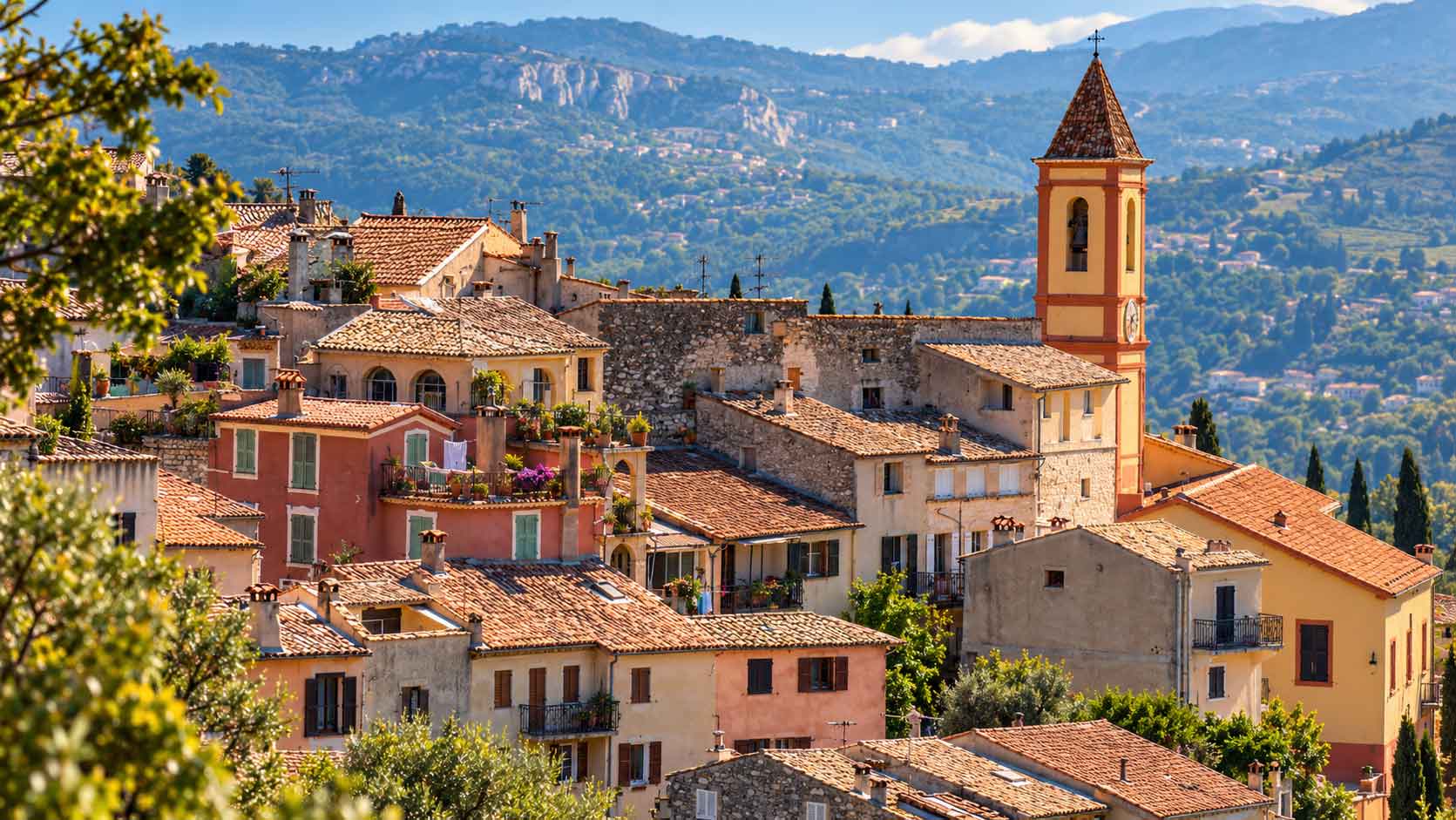
Aspremont Travel Guide: A Hilltop Village Above Nice
Aspremont is a peaceful perched village in the hills north of Nice, offering stone lanes, historic religious buildings and magnificent views over the Var Valley and the surrounding mountains. Built in a distinctive circular pattern, the old village is an excellent destination for travellers who want to discover a quieter and more authentic side of the French Riviera.
Only around 13 kilometres from Nice, Aspremont feels far removed from the busy Mediterranean coast. Visitors come here to explore the historic centre, admire the Church of Saint-Jacques-le-Majeur, discover small chapels and walk through landscapes of olive trees and rocky hills. The village is also a convenient starting point for hikes towards Mont Chauve and the ruins of the earlier medieval settlement on Mont Barri.
In this Aspremont travel guide:
- Best things to do in Aspremont
- Explore the historic village
- Church of Saint-Jacques-le-Majeur
- Historic chapels
- Panoramic viewpoints
- Ruins of Old Aspremont
- Hiking to Mont Chauve
- Walking and cycling
- Food and local traditions
- Where to stay
- Best time to visit
- How to get to Aspremont
- Parking and getting around
- One-day itinerary
- Places to visit nearby
- Frequently asked questions
Best Things to Do in Aspremont
Aspremont is small enough to explore in a few hours, but its location makes it particularly attractive to walkers, photographers and travellers interested in traditional Provençal villages. The main attractions are concentrated around the historic centre, while hiking trails lead into the hills surrounding the village.
1. Explore the Historic Village
The historic centre of Aspremont is built in an unusual circular pattern. Its houses form concentric rings around the church, creating a compact network of narrow lanes, stone stairways, vaulted passages and small squares.
Walking is the best way to discover the village. Look for old stone façades, colourful shutters, fountains, religious niches and passages opening onto views of the surrounding countryside. The centre is quiet and largely residential, so visitors should respect the privacy of local residents.
The elevated position of Aspremont once helped protect its inhabitants. Today, it provides beautiful views across the Var Valley, the hills north of Nice and, in clear weather, towards the Mediterranean coast.
2. Visit the Church of Saint-Jacques-le-Majeur
The Church of Saint-Jacques-le-Majeur stands at the heart of the old village. It is one of Aspremont’s principal historic monuments and contains religious artworks associated with different periods of the village’s history.
Inside, visitors may see old paintings and murals, an eighteenth-century altarpiece and a traditional statue of the Virgin. Opening hours can vary, and the church may be accessible mainly during services, local events or heritage days.
3. Discover Aspremont’s Historic Chapels
Aspremont has several small religious buildings that reflect the history and traditions of the local community.
Chapelle Saint-Claude was built in the seventeenth century as a votive chapel associated with protection against plague. It contains a polychrome wooden statue of the Virgin and Child and remains an important part of the village’s heritage.
Notre-Dame des Salettes has much older origins. The site was mentioned during the Middle Ages and was historically connected with the Benedictine Abbey of Saint-Pons in Nice. Its quiet setting makes it an interesting stop during a walk around Aspremont.
The village also has a chapel associated with the White Penitents, a religious brotherhood that played a significant role in the social and spiritual life of many Provençal communities.
Access to the chapels is not always guaranteed, but their exteriors and surroundings can still be included in a walking tour of the village.
4. Enjoy the Panoramic Viewpoints
Aspremont’s hilltop location offers wide views over the Var plain, the surrounding limestone hills and the northern districts of Nice. Several viewpoints can be found along the roads and paths around the village.
Early morning provides softer light and a peaceful atmosphere, while late afternoon is particularly attractive for photography. On clear days, the landscape extends towards the Mediterranean and the mountain ranges of the Alpes-Maritimes.
5. Walk to the Ruins of Old Aspremont on Mont Barri
Before the present village developed, an earlier fortified settlement stood on Mont Barri. The remains of the medieval site can be reached on foot by a short but sometimes steep and rocky trail.
Only ruins remain, but the site is interesting for its history and commanding position. The walk also provides excellent views over the Var and Paillon valleys. Wear suitable walking shoes, carry water and avoid the exposed trail during the hottest hours of summer.
6. Hike to Mont Chauve and Its Fort
Mont Chauve d’Aspremont rises to approximately 870 metres and is one of the most recognisable summits above Nice. Its open slopes offer impressive views of the coast, the Nice metropolitan area and the mountains of the hinterland.
Several hiking routes explore Mont Chauve. Depending on the chosen starting point and itinerary, walks may take around three to four hours and include a significant ascent. One official circuit is approximately 8.4 kilometres long with around 460 metres of elevation gain.
The summit is marked by a nineteenth-century military fort constructed between 1885 and 1887. The building has served different technical and public-service functions, and access to its interior may be restricted. Visitors should remain on authorised paths and admire the structure from accessible areas.
7. Explore the Monts d’Aspremont
The countryside surrounding Aspremont is crossed by walking and mountain-biking routes. Trails pass through olive groves, dry-stone terraces, scrubland and rocky ridges overlooking the coast and the valleys.
Experienced cyclists can explore routes towards Mont Cima and neighbouring villages. The terrain includes climbs and technical sections, so mountain bikes and appropriate equipment are recommended.
In summer, check local fire-risk restrictions before entering forested or natural areas. Strong sun, limited shade and a lack of water sources can make even short walks demanding.
Food and Local Traditions
Aspremont’s rural landscape has traditionally been associated with olive trees, vines and fig trees. Although agricultural activity is less extensive than in the past, these products remain part of the village’s cultural identity.
Local and regional dishes may include Provençal vegetables, olive oil, cheese, charcuterie, pissaladière, petits farcis and seasonal desserts. The village has a limited number of dining options, so booking in advance is advisable, particularly at weekends.
Brasserie Le Saint-Claude is located in the village and serves traditional French and Provençal-style dishes. Opening hours can change according to the season, so verify them before travelling.
Where to Stay in Aspremont
Accommodation inside Aspremont is limited and mainly consists of holiday rentals, guesthouses and small private properties. Staying in the village is a good choice for travellers looking for peace, countryside and easy access to hiking routes.
For a wider selection of hotels, restaurants and public transport, consider staying in Nice. Nearby villages such as Tourrette-Levens, Falicon, Saint-Blaise and Castagniers may also have guesthouses and countryside accommodation.
Best Time to Visit Aspremont
Aspremont can be visited throughout the year, but spring and autumn generally offer the most comfortable conditions for walking and sightseeing.
Spring: mild temperatures, green landscapes and wildflowers make this an excellent season for hiking.
Summer: the village is usually cooler than central Nice, but exposed trails can become very hot. Visit early in the morning or late in the afternoon.
Autumn: pleasant temperatures and softer light are ideal for photography and outdoor activities.
Winter: the village is quiet and often sunny, although strong winds, rain and occasional cold weather are possible.
How to Get to Aspremont
By Car from Nice
Aspremont is approximately 13 kilometres north of Nice. From central Nice, follow the roads towards the northern districts and continue on the M414 in the direction of Aspremont. The journey usually takes around 25 to 35 minutes, depending on traffic and your starting point.
By Car from Monaco
From Monaco, drive towards Nice and then continue through the northern side of the city towards Aspremont. Depending on traffic and the selected route, the journey may take approximately 45 minutes to just over one hour.
By Car from Cannes or Antibes
From Cannes or Antibes, take the A8 motorway towards Nice, then follow signs towards northern Nice and Aspremont. Allow approximately 50 to 80 minutes, depending on traffic. Motorway tolls may apply.
By Public Transport from Nice
Aspremont Village is served by the Lignes d’Azur network. Bus routes 76 and 62 provide connections between Aspremont and different areas of Nice. Services may be limited, especially in the evening, on Sundays and on public holidays.
Some sectors of Aspremont are also served by reservation-based transport services, including the C5 and C7 on-demand lines. These services normally need to be booked in advance.
Always check the current timetable, stop location and reservation requirements on the official Lignes d’Azur website before travelling.
By Public Transport from Monaco
Take a regional TER train from Monaco-Monte-Carlo to Nice-Ville. From Nice, continue by tram or local bus to a connection with bus 76 or 62 towards Aspremont Village. The complete journey can take around 1.5 to 2 hours, depending on connections.
Parking and Getting Around
Parking is available near the entrance to the village, including spaces close to the Saint-Claude area. Leave your vehicle outside the narrow historic centre whenever possible, as the old lanes are not suitable for visitor traffic.
The centre of Aspremont is compact and best explored on foot. Some streets are steep and include steps or uneven paving, so comfortable shoes are recommended.
One-Day Itinerary in Aspremont
Morning: arrive in Aspremont and begin with a walk through the circular historic centre. Visit the Church of Saint-Jacques-le-Majeur and look for the village’s small chapels and architectural details.
Lunch: enjoy a meal in the village or bring a picnic if you plan to continue into the surrounding hills.
Afternoon: choose a walk towards the ruins of Old Aspremont on Mont Barri or follow part of a trail towards Mont Chauve. Allow enough time to return before sunset.
Evening: stop at a panoramic viewpoint to enjoy the changing light over the Var Valley and the hills around Nice.
Places to Visit Near Aspremont
Nice: discover the Old Town, Promenade des Anglais, Castle Hill, museums, beaches and colourful food markets.
Falicon: a small perched village overlooking Nice, known for its stone houses and peaceful historic centre.
Tourrette-Levens: visit its medieval centre, hilltop castle and cultural attractions.
Saint-Blaise: a quiet hillside village surrounded by Mediterranean countryside.
Castagniers: explore a rural village with olive-growing traditions and views over the Var Valley.
Gattières and Carros: two historic villages on the western side of the Var Valley, offering old streets, panoramic views and local heritage.
Frequently Asked Questions About Aspremont
Is Aspremont worth visiting?
Yes. Aspremont is worth visiting for its unusual circular village layout, historic church and chapels, peaceful atmosphere, panoramic views and access to hiking trails above Nice.
How much time do you need in Aspremont?
Allow two to three hours to explore the village. Plan a full day if you want to include lunch and a hike towards Mont Barri or Mont Chauve.
Can you visit Aspremont without a car?
Yes. Public buses connect Aspremont with Nice, but departures may be limited. Check the latest timetable carefully and plan your return journey before leaving Nice.
Is Aspremont suitable for children?
The village itself can be visited with children, although there are steep lanes and steps. Mountain trails require suitable footwear, water and close supervision.
Is the Mont Chauve hike difficult?
The difficulty depends on the selected route. Walkers should expect rocky terrain, exposed sections and a noticeable elevation gain. Good walking shoes, sun protection and sufficient water are essential.
Are there restaurants in Aspremont?
There are limited dining options in the village. Check opening times and reserve in advance, especially at weekends or outside the main tourist season.
Where can you park in Aspremont?
Visitor parking is available near the edge of the village. It is best to park outside the historic centre and continue on foot through the narrow streets.
City Gallery