Monaco Travel Guide: Discover the Principality between the Sea, History and Elegance
Monaco is an independent principality located on the French Riviera, between France and the Mediterranean Sea. Despite its small size, this unique destination offers remarkable historic landmarks, museums, gardens, beaches, harbours and several districts, each with its own distinctive character.
From the historic Rock of Monaco-Ville to the elegant streets of Monte-Carlo, Port Hercule, Larvotto and Fontvieille, the Principality can be explored during a day trip or a longer stay. This Monaco travel guide covers the main attractions, best districts and practical information you need to organise your visit.
In this Monaco travel guide:
- Best things to do in Monaco
- Explore Monaco-Ville and the Rock
- Visit the Prince’s Palace
- Discover Monaco Cathedral
- Visit the Oceanographic Museum
- Explore Monte-Carlo
- Walk around Port Hercule
- Relax at Larvotto Beach
- Discover Fontvieille
- The main districts of Monaco
- What to eat in Monaco
- The best time to visit
- Getting to and around Monaco
- The best day trips from Monaco
- Frequently asked questions
Best Things to Do in Monaco
Monaco offers an impressive variety of activities within a very compact area. Visitors can discover the Prince’s Palace, explore the narrow streets of the Rock, visit the Oceanographic Museum, admire Casino Square or walk around the harbours.
The Principality also has beautiful gardens, cultural attractions, shops, restaurants and a Mediterranean beach. Its compact size makes it easy to combine historic landmarks, urban walks and time beside the sea.
Explore Monaco-Ville and the Rock
Monaco-Ville is the historic heart of the Principality. Located on a rocky promontory overlooking the Mediterranean, this district is commonly known as Le Rocher, or the Rock.
Its narrow streets, colourful façades, small squares and pedestrian passages create an atmosphere very different from that of Monaco’s modern districts. Monaco-Ville is home to the Prince’s Palace, Monaco Cathedral, the Oceanographic Museum and several gardens and panoramic viewpoints.
The Rock is easy to explore on foot. From its terraces, visitors can admire Port Hercule, Fontvieille, the Mediterranean Sea and the mountains surrounding Monaco.
Visit the Prince’s Palace of Monaco
The Prince’s Palace is the official residence of Monaco’s princely family. Located at the top of the Rock, it occupies the site of a former Genoese fortress founded during the Middle Ages.
When the State Apartments are open to visitors, the tour includes several ceremonial rooms, historic frescoes, period furniture and displays relating to the history of the Grimaldi dynasty.
Palace Square also offers panoramic views over the Principality. The changing of the guard attracts many visitors, but it is advisable to check the current schedule before arriving.
Discover Monaco Cathedral
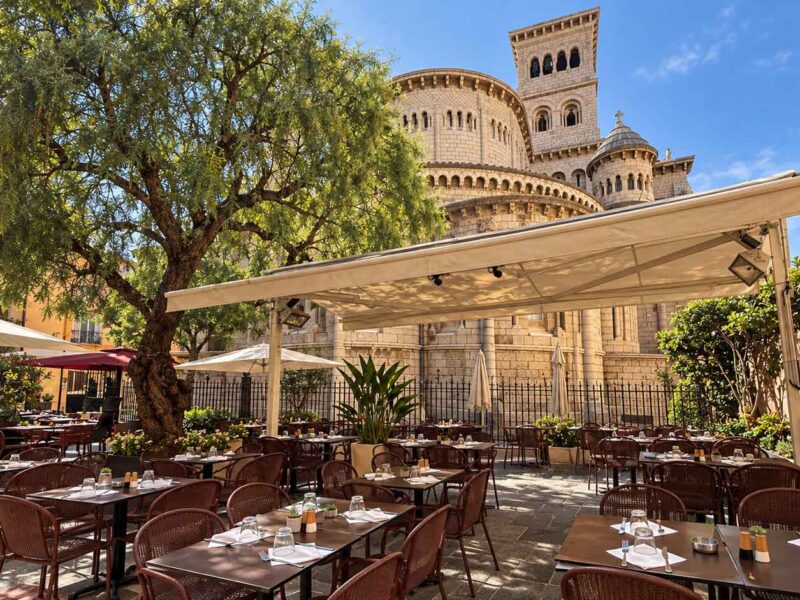
The Cathedral of Our Lady Immaculate is situated in Monaco-Ville, a short walk from the Prince’s Palace. Constructed from pale stone, it is one of the Principality’s most important religious monuments.
The cathedral contains the tombs of several members of the princely family, including Prince Rainier III and Princess Grace. Visitors can also see religious artworks, an impressive high altar and a large organ.
The cathedral remains an active place of worship. Visitors should remain quiet, respect religious services and wear appropriate clothing.
Visit the Oceanographic Museum of Monaco
Built into the side of the Rock above the Mediterranean Sea, the Oceanographic Museum is one of Monaco’s most impressive landmarks. Inaugurated in 1910, it is dedicated to the study, understanding and protection of the marine world.
The museum contains aquariums, natural history collections, scientific exhibitions and educational areas. Its rooftop terrace offers spectacular views of the sea and the surrounding coastline.
The museum is suitable for adults and families. Allow several hours if you would like to explore the aquariums and exhibitions without rushing.
Explore Monte-Carlo and Casino Square
Monte-Carlo is Monaco’s most famous district, but it represents only one part of the Principality. Its iconic centre is Casino Square, surrounded by elegant buildings, landscaped gardens, prestigious hotels and luxury boutiques.
The Casino de Monte-Carlo is renowned for its Belle Époque architecture and historic gaming rooms. Entry requirements may vary depending on the area, time and event. Identification and appropriate clothing may be required.
Even without entering the gaming rooms, Casino Square is worth visiting for its architecture, gardens and distinctive atmosphere. The nearby streets continue through Monaco’s famous Carré d’Or district.
Walk around Port Hercule
Port Hercule is Monaco’s principal harbour. Located between the Rock and Monte-Carlo, it accommodates sailing boats, pleasure craft and large yachts.
A walk around the harbour provides excellent views of the city rising above the waterfront. Restaurants, cafés and several sports facilities can also be found nearby.
Port Hercule hosts various events throughout the year. During major events, particularly around the Monaco Grand Prix, access and traffic arrangements may be changed.
Relax at Larvotto Beach
Larvotto is Monaco’s main seaside district. Its landscaped beach provides an opportunity to swim in the Mediterranean while remaining close to the centre of the Principality.
The waterfront includes a pedestrian promenade, restaurants, cafés and visitor facilities. Part of the beach is freely accessible, while some areas are operated by private beach establishments.
During the summer, it is best to arrive in the morning. Visitors should respect the designated swimming areas, local safety instructions and the colour of the beach flags.
Discover Fontvieille
Fontvieille is a modern district constructed largely on land reclaimed from the sea. It contains a marina, gardens, residential buildings, shops and several sports facilities.
The Princess Grace Rose Garden is one of the district’s most attractive green spaces. Visitors can also walk around the Fontvieille harbour and enjoy views towards the Rock.
The district is home to Stade Louis-II, which hosts AS Monaco football matches and other sporting events.
The Main Districts of Monaco
Monaco-Ville is the historic centre located on the Rock. It contains the Prince’s Palace, Monaco Cathedral, the Oceanographic Museum and the main government institutions.
Monte-Carlo is known for Casino Square, prestigious hotels, luxury shops and Belle Époque architecture. La Condamine extends around Port Hercule and the traditional market at Place d’Armes.
Larvotto is Monaco’s main beach and waterfront district, while Fontvieille offers a more modern environment around its marina, gardens and Stade Louis-II.
Monaco also includes Moneghetti, Jardin Exotique, La Rousse and several residential areas. Public lifts, escalators and pedestrian passages make it easier to move between the city’s different levels.
What to Eat in Monaco
Monégasque cuisine reflects Mediterranean, Provençal, French and Italian influences. One of the best-known local specialities is barbagiuàn, a small fried pastry traditionally filled with Swiss chard, ricotta and herbs.
Visitors can also try socca, pissaladière, Mediterranean fish, seafood and dishes prepared with seasonal vegetables and olive oil.
For a more local atmosphere, explore La Condamine Market and the establishments around Place d’Armes. Monte-Carlo and the harbours also offer a wide selection of restaurants, ranging from informal cafés to fine-dining establishments.
What Is the Best Time to Visit Monaco?
Monaco can be visited throughout the year. Spring and early autumn generally offer pleasant temperatures for walking between the districts, exploring the gardens and enjoying the outdoor terraces.
Summer is lively and well suited to swimming, but the beach, streets and car parks are busier. Winter is quieter and provides good conditions for visiting museums, restaurants and cultural attractions.
Check Monaco’s events calendar before selecting your travel dates. The Monaco Grand Prix, exhibitions, concerts and sporting competitions can affect traffic and create high demand for accommodation.
Getting to and around Monaco
Monaco is a compact destination that can be explored on foot. However, the city contains many steep streets and different levels. Public lifts, escalators and pedestrian galleries make getting around easier.
The public bus network serves the principal districts, including Monaco-Ville, Monte-Carlo, Larvotto, Fontvieille and the railway station. A solar-powered boat bus also connects the two sides of Port Hercule.
Monaco–Monte-Carlo railway station is centrally located. Regional trains connect Monaco with Nice, Menton, Cannes, Antibes, Villefranche-sur-Mer and Ventimiglia.
A car is generally unnecessary for visiting Monaco. Public transport avoids difficulties associated with traffic, steep streets and parking.
Best Day Trips from Monaco
Monaco is an excellent base for exploring the French Riviera. The nearby hilltop village of Èze offers medieval streets, an exotic garden and spectacular views over the Mediterranean.
In Beaulieu-sur-Mer, visitors can discover Villa Kérylos, while the Saint-Jean-Cap-Ferrat peninsula is home to Villa Ephrussi de Rothschild and several scenic coastal walks.
Villefranche-sur-Mer, Nice, Menton and Roquebrune-Cap-Martin are easily accessible by train. It is also possible to travel to Ventimiglia and the Italian Riviera for a day trip.
Frequently Asked Questions about Monaco
How many days do you need in Monaco?
One day is enough to see the principal attractions in Monaco-Ville, walk around Port Hercule and explore Monte-Carlo. A stay of two or three days provides more time for museums, Larvotto Beach and Monaco’s different districts.
Are Monaco and Monte-Carlo the same place?
No. Monaco is the name of the independent Principality, while Monte-Carlo is one of its districts. The Prince’s Palace and the Oceanographic Museum are located in Monaco-Ville, not Monte-Carlo.
Can you explore Monaco on foot?
Yes. The main attractions can be reached on foot, but Monaco has many steep streets. Public lifts, escalators and buses help visitors travel between different levels.
Is Monaco only a luxury destination?
No. Many parts of Monaco can be explored free of charge, including the streets of Monaco-Ville, the harbours, public gardens, Larvotto Beach and several panoramic viewpoints.
Can you visit Monaco without a car?
Yes. Monaco–Monte-Carlo railway station is conveniently located, and public buses serve the main districts. Travelling by train is often the easiest option from Nice, Menton and other coastal destinations.
Is Monaco suitable for families?
Yes. The Oceanographic Museum, gardens, harbours, beach and pedestrian walks offer plenty of family-friendly activities. Remember that some streets are steep, so comfortable shoes are recommended.
City Gallery