Bonson Travel Guide: Medieval Heritage, Chapels and Panoramic Views
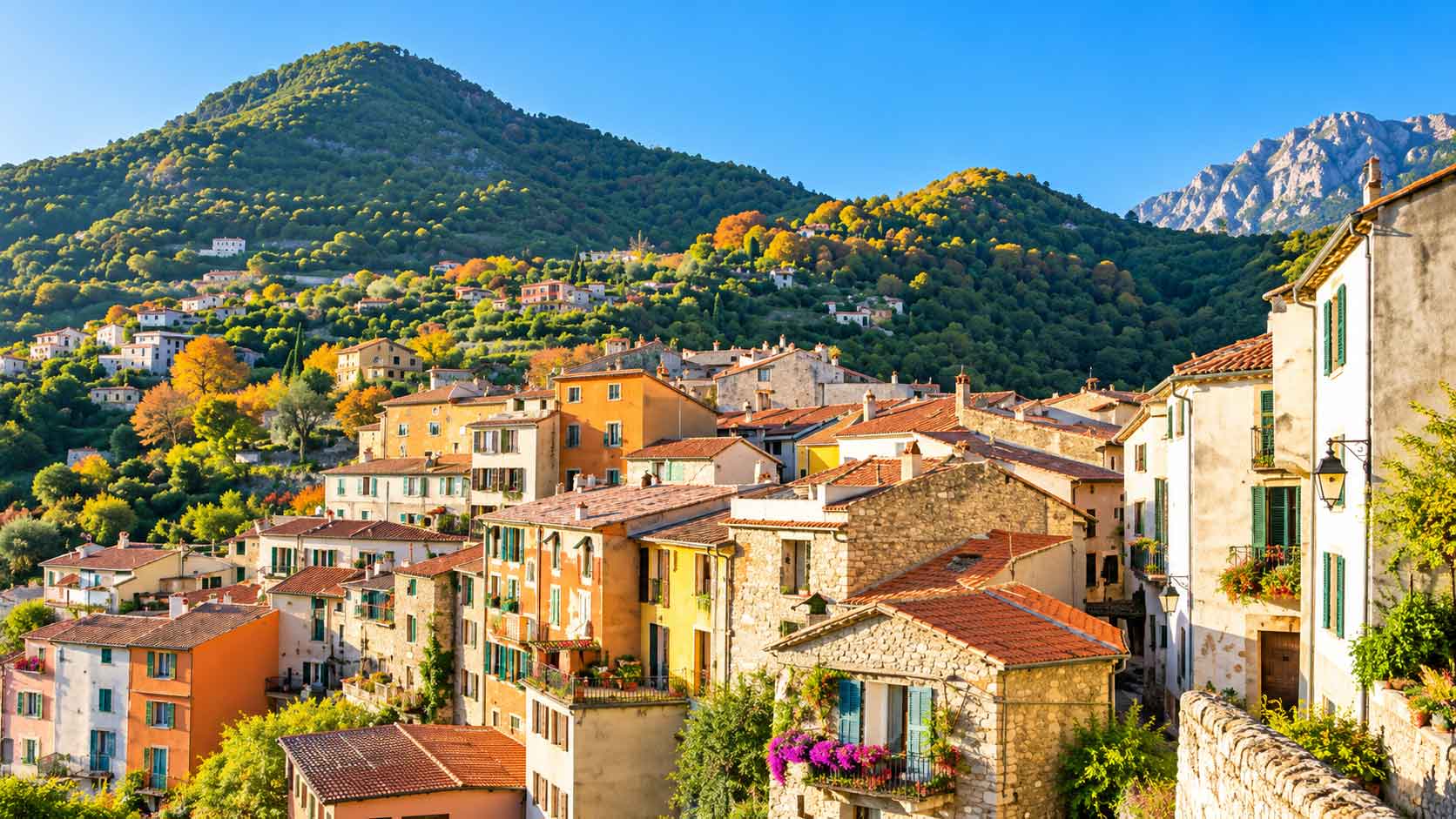
Perched on a rocky ridge above the Var and Estéron valleys, Bonson is one of the most impressive balcony villages in the Nice hinterland. Built lengthwise along the mountain, the village overlooks a dramatic landscape of river valleys, olive-covered hills and the first peaks of the Southern Alps.
Bonson is an excellent destination for travellers looking for medieval architecture, historic chapels, panoramic walks and the quieter side of the French Riviera. Despite being relatively close to Nice, the village has preserved a peaceful rural atmosphere and a strong connection to traditional olive growing.
In this Bonson travel guide:
- ◇ Best things to do in Bonson
- ◇ Explore the historic village
- ◇ Enjoy the panoramic viewpoints
- ◇ Visit Saint-Benoît Church
- ◇ Follow the Bonson chapel circuit
- ◇ See the remains of the feudal castle
- ◇ Discover the olive groves and oil mill
- ◇ History of Bonson
- ◇ Walking and outdoor activities
- ◇ What to eat in Bonson
- ◇ Best time to visit
- ◇ How to get to Bonson
- ◇ Parking and getting around
- ◇ One-day itinerary
- ◇ Places to visit around Bonson
- ◇ Frequently asked questions
Best Things to Do in Bonson
The best way to discover Bonson is on foot. Begin near the town hall and follow the narrow streets towards the upper part of the village. Along the way, you will encounter old stone houses, covered passages, small squares, historic chapels and several terraces overlooking the surrounding valleys.
The main attractions include Saint-Benoît Church, the Saint-Hospice Chapel, the Saint-Antoine chapels, Saint-Jean-Baptiste Chapel, the remains of the medieval castle and the traditional olive-growing landscape. A marked chapel circuit helps visitors discover the village’s religious heritage.
Explore the Historic Village
Bonson is a traditional perched village of the Nice hinterland, built on a narrow rocky spur attached to the Mont Vial massif. Its elongated layout follows the shape of the ridge and creates a natural panoramic promenade.
Walk through the intimate medieval lanes and look for ochre, ivory and orange façades, old wooden doors, blue or brown shutters, stone lintels and vaulted passages. Steps connect the different levels of the village, while small terraces reveal changing views over the landscape.
The historic centre is compact, but its sloping streets invite slow exploration. Comfortable shoes are recommended because some lanes are steep, uneven or accessible only by steps.
Enjoy the Panoramic Viewpoints
Bonson occupies an exceptional position above the meeting point of the Var, Estéron and Vésubie valleys. From the village, visitors can admire the surrounding hills, the river plains, the lower Alps and, in clear weather, distant views towards the Mediterranean coast.
One of the most accessible viewpoints is near Place Saint-Benoît. Other panoramic views appear along the streets leading towards the church, the cemetery and the Saint-Hospice plateau.
The viewpoints are particularly beautiful in the morning, when the valleys are illuminated by soft light, and in the late afternoon, when the hills and olive terraces take on warmer colours.
Visit Saint-Benoît Church
Saint-Benoît Church stands in the upper part of the village near the former medieval castle. Built in the Romanesque tradition and altered over the centuries, it is one of Bonson’s most important historic monuments.
The church contains several valuable religious works, including altarpieces dedicated to Saint Benedict, Saint John the Baptist and Saint Anthony. The Saint John the Baptist altarpiece is associated with Antoine Bréa and dates from the early sixteenth century.
The square bell tower is one of the most recognisable features of Bonson’s skyline. Opening hours may depend on religious services, local events and guided visits, so check locally before planning your visit.
Follow the Bonson Chapel Circuit
Bonson is sometimes described as the “village of nine chapels”. A heritage circuit presented near the town hall introduces visitors to the religious buildings scattered around the village and its surrounding landscape.
Saint-Hospice Chapel
Built on a plateau above the village, the seventeenth-century Saint-Hospice Chapel offers one of Bonson’s finest panoramas. From its esplanade, the view extends across the Var plain and, in favourable conditions, towards the Mediterranean.
The chapel is dedicated to Saint Hospice, a hermit associated with the Saint-Jean-Cap-Ferrat peninsula. A traditional procession and religious celebration are held in his honour.
Saint-Jean-Baptiste Chapel
Located below the village on an old mule track, Saint-Jean-Baptiste Chapel is notable for its rare star-shaped Gothic vault. Parts of the building may date from the late Middle Ages, and the structure may originally have served as a lookout or defensive tower.
The altarpiece created for the chapel in the early sixteenth century is now preserved inside Saint-Benoît Church.
Saint-Antoine-l’Ermite Chapel
Situated close to the town hall, this small chapel probably dates from the fifteenth century. It may have functioned as a “gate chapel”, symbolically protecting inhabitants and travellers entering or leaving the village.
Saint-Antoine-de-Padoue Chapel
Also known locally as the chapel of the Passet, this building dates mainly from the seventeenth century. It has been restored and contains religious art connected with the traditional devotions of the village.
Access to the chapels is not always possible outside special events or guided visits. Even when the interiors are closed, the circuit remains an enjoyable way to explore Bonson.
See the Remains of the Feudal Castle
A fortified castle once stood on the rocky summit where the cemetery is now located. Only limited remains survive, including a tower associated with the medieval defensive complex.
The site helps explain Bonson’s strategic position. From the ridge, inhabitants could observe movement through the Var, Estéron and Vésubie valleys and watch over routes connecting the coast with the Alpine hinterland.
Discover the Olive Groves and Traditional Oil Mill
Olive growing is an essential part of Bonson’s landscape and identity. The southern slopes are shaped by traditional stone terraces known as restanques, many of which are planted with old olive trees.
The local olive groves cover a significant part of the commune and mainly produce the small Cailletier olive associated with the Nice region. These olives can be used for table olives and for delicately flavoured local olive oil.
Bonson also has a traditional oil mill where local producers can press their harvest. The annual olive celebration, generally organised in June, highlights local agriculture, village traditions and regional products.
History of Bonson
The existence of Bonson is documented as early as 1092. Its name may be connected with local words referring to an escarpment, rocky ledge or natural barrier—a fitting description of the village’s position.
During the Middle Ages, Bonson developed around a fortified site overlooking important routes through the valleys. The village preserved its strategic importance because of its commanding views and naturally defensible location.
In 1364, Queen Joanna of Provence granted rights over Bonson, Bouyon and Tourrettes to Rainier Grimaldi, Lord of Menton. This event created a direct historical connection between Bonson and the Grimaldi family of Monaco.
Today, the church, chapels, castle remains and narrow streets preserve traces of this medieval past. Red-and-white diamond motifs used in local heraldry also recall the historic connection with the Grimaldi family.
Walking and Outdoor Activities
Walking around the village and Saint-Hospice
A short walk through the historic centre and towards the Saint-Hospice plateau is suitable for visitors who want panoramic views without undertaking a long mountain hike. The terrain can be steep, so take your time and wear suitable footwear.
Plan-du-Var–Bonson hiking circuit
More experienced walkers can explore routes connecting the Var Valley with Bonson. These paths climb through Mediterranean vegetation and olive-growing landscapes before reaching the perched village.
The elevation difference can make the walk demanding, particularly during hot weather. Carry enough water and avoid exposed climbs during the hottest hours of summer.
Mont Vial and the surrounding hills
The wider area offers access to walking routes through the hills of the Nice hinterland. The Mont Vial sector is known for open landscapes and extensive views, but longer routes require appropriate maps, preparation and mountain footwear.
Before starting a hike, check the weather, wildfire restrictions and the official list of closed paths. Some routes may be temporarily diverted or closed following damage, maintenance work or extreme conditions.
What to Eat in Bonson
Local food reflects the culinary traditions of Nice and the middle country. Olive oil is one of the most important regional products, together with Cailletier olives and tapenade.
Depending on the season and the establishment, you may find socca, pissaladière, vegetable tarts, ravioli, gnocchi, stuffed vegetables, daube and dishes prepared with herbs from the surrounding hills.
Bonson has a limited selection of shops and dining options. Check opening days in advance or combine the visit with lunch in Gilette, Saint-Martin-du-Var, Levens or another nearby village.
Best Time to Visit Bonson
Spring is an excellent season for walking, photography and exploring the olive terraces. Temperatures are generally comfortable and the surrounding countryside is green.
Summer brings long, sunny days and local festivities. Because the lanes and hiking paths can become very hot, visit the village in the morning or late afternoon and carry drinking water.
Early autumn offers softer light, pleasant temperatures and a peaceful atmosphere. It is one of the best periods for combining the village with walks in the surrounding hills.
Winter is usually quiet and can provide exceptionally clear views. However, some restaurants, chapels and visitor services may operate on reduced schedules.
How to Get to Bonson
From Nice by car
Bonson is approximately 36 kilometres from Nice. Follow the Var Valley north from Nice towards Carros and Plan-du-Var. Near the Pont Charles-Albert area, cross the Var and follow the mountain road towards Gilette and Bonson.
The journey usually takes around 40 to 50 minutes, depending on traffic and your starting point. The final road climbs through a series of bends and requires careful driving.
From Nice Airport
From Nice Côte d’Azur Airport, follow the Var Valley north and continue towards Plan-du-Var before taking the road to Bonson. Under normal conditions, allow approximately 40 to 55 minutes.
By public transport
Public transport to the hilltop village is limited. Services may include regional buses, school-period routes and transport on demand. Timetables can vary according to the day and season.
Another possibility is to travel from Nice on the Train des Pignes towards Plan-du-Var and continue by local transport or a pre-booked taxi. Plan-du-Var station is in the valley and should not be confused with the historic centre of Bonson, which is located considerably higher on the mountain.
Always check the current Lignes d’Azur, ZOU! and local transport-on-demand schedules before travelling without a car.
From Monaco
From Monaco, drive towards Nice and join the main route through the Var Valley before continuing towards Plan-du-Var and Bonson. Depending on traffic, the journey generally takes around one hour to one hour and twenty minutes.
From Cannes or Antibes
From Cannes or Antibes, travel towards Nice and the lower Var Valley, then follow the road north towards Carros and Plan-du-Var. Allow approximately one hour to one hour and thirty minutes, depending on traffic.
Parking and Getting Around
Parking is available near the entrances to the village, but spaces can be limited during events and busy weekends. Park outside the narrow historic lanes and continue on foot.
The old village contains steep streets, steps and uneven surfaces. It is compact enough to explore without a vehicle, but it may be challenging for visitors with reduced mobility or families using a pushchair.
Avoid driving into streets that appear narrow or restricted. Some lanes are suitable only for residents and small local vehicles.
One-Day Itinerary in Bonson
Morning: begin near the town hall and follow the chapel circuit through the historic village. Explore the narrow lanes, Saint-Antoine Chapel and the covered passages before climbing towards Saint-Benoît Church.
Late morning: visit the church if it is open, discover the remains of the feudal castle and enjoy the panorama from Place Saint-Benoît.
Lunch: have lunch in the surrounding area or bring a picnic made with local products. Remember to leave all heritage sites and viewpoints clean.
Afternoon: walk towards Saint-Hospice Chapel for another exceptional view over the valleys. If you have more time, explore the olive terraces or follow a short local walking route.
Evening: stop in Gilette, Saint-Martin-du-Var or Levens before returning to Nice or the coast.
Places to Visit Around Bonson
Gilette
Gilette is another perched village overlooking the Estéron Valley. Its ruined castle, historic streets and mountain views make it a natural addition to a Bonson itinerary.
La Roquette-sur-Var
La Roquette-sur-Var offers panoramic views over the Var Valley and preserves the atmosphere of a traditional hilltop village close to Nice.
Saint-Martin-du-Var
Located in the valley below the surrounding villages, Saint-Martin-du-Var provides shops, transport connections and access to the Train des Pignes.
Le Broc
Le Broc has a compact historic centre, a pleasant village square and extensive views over the Var plain and the lower Alps.
Bouyon
Bouyon is a peaceful mountain village surrounded by limestone hills and walking routes. It is a good choice for travellers interested in the rural landscapes of the Estéron Valley.
Levens
Levens is one of the larger villages of the Nice hinterland, with a lively centre, historic streets and access to several countryside walks.
Frequently Asked Questions About Bonson
How long do you need to visit Bonson?
Allow approximately two to three hours to explore the historic centre, church surroundings, chapels and viewpoints. A full day is useful if you also want to take a longer walk or visit nearby villages.
Is Bonson worth visiting?
Yes. Bonson is particularly rewarding for visitors interested in perched villages, medieval heritage, religious architecture, olive-growing landscapes and panoramic photography.
Is Bonson the same as Bonson in the Loire department?
No. This guide concerns Bonson in the Alpes-Maritimes, postcode 06830. Another commune named Bonson is located in the Loire department near Saint-Étienne.
Can you visit Bonson without a car?
It is possible, but it requires careful planning because public transport to the hilltop village is limited. Check local bus and transport-on-demand services in advance. A car remains the easiest option.
Is Bonson suitable for children?
Yes, but parents should supervise children near steep lanes, stairways, roads and exposed viewpoints. The short chapel circuit can be an enjoyable family activity.
Is Bonson accessible to visitors with reduced mobility?
Parts of the village near the road and main square may be accessible, but many historic lanes contain steps, slopes and uneven surfaces. Accessibility is therefore limited in the oldest sections.
Are the churches and chapels always open?
No. Opening hours depend on religious services, exhibitions, heritage events and local arrangements. Check with the town hall or tourism office before travelling specifically to see the interiors.
Where is the best viewpoint in Bonson?
Place Saint-Benoît and the area around Saint-Hospice Chapel offer some of the best views over the Var and Estéron valleys. Visibility towards the coast is best on clear days.
Galerie de la ville