Roquebrune-Cap-Martin
Découvrez que faire à Roquebrune-Cap-Martin, entre village médiéval et Méditerranée : château millénaire, sentier Le Corbusier, Cap Moderne, plages sauvages, olivier millénaire et panoramas sur Monaco.
Visiting Roquebrune-Cap-Martin means discovering several different sides of the French Riviera in a single destination. Located between Monaco and Menton, the town combines a medieval hilltop village, a pine-covered Mediterranean cape, beaches with turquoise water and exceptional architectural heritage associated with Eileen Gray and Le Corbusier.
If you are looking for the best things to do in Roquebrune-Cap-Martin, how to visit the medieval village, which beaches to choose or how to walk the Le Corbusier coastal path, this guide will help you plan your stay. It includes the town’s top attractions, suggested itineraries for one, two or three days, the best areas to stay and practical travel advice.
Best Things to Do in Roquebrune-Cap-Martin
1. Explore the medieval village of Roquebrune
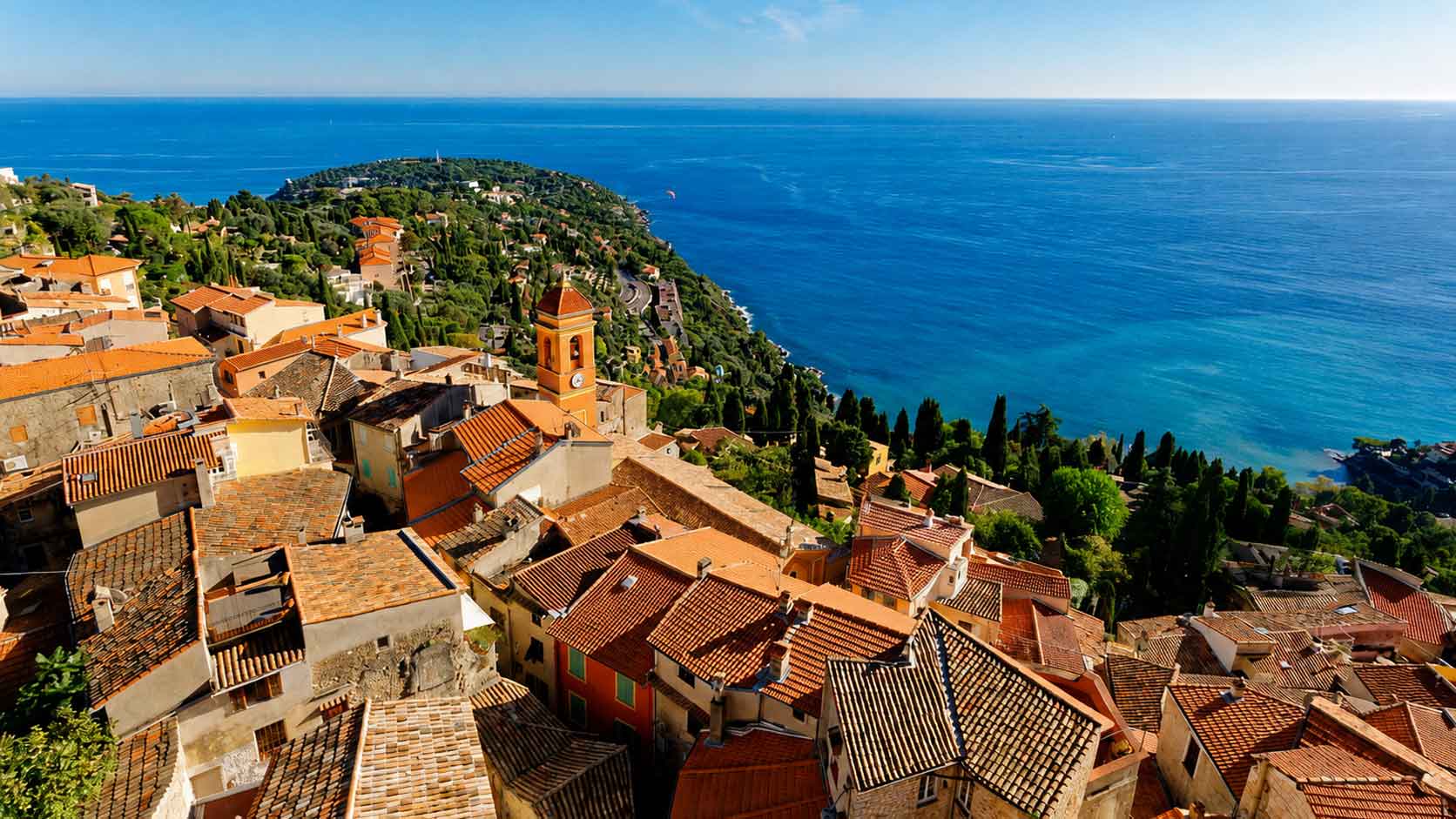
Perched almost 300 meters above the Mediterranean, the old village of Roquebrune overlooks Cap Martin, Monaco and the surrounding coastline. Its narrow streets, stone stairways, vaulted passages and historic houses preserve the atmosphere of a fortified Riviera village.
The village is explored entirely on foot. Take your time walking through the small squares, observing the old doorways and looking for views of the Mediterranean between the buildings. The streets are steep and contain many steps, so comfortable shoes are essential.
2. Admire the view from Place des Deux Frères
Located at the entrance to the medieval village, Place des Deux Frères is one of the finest viewpoints in Roquebrune-Cap-Martin. It offers a remarkable panorama of Cap Martin, the Bay of Monaco and the Mediterranean coastline.
The square is an excellent starting point before entering the historic streets. The light is especially beautiful in the morning and late afternoon, when the cape and village façades take on warmer colors.
3. Visit Roquebrune Medieval Castle
Built around 970, Roquebrune Castle is one of the oldest surviving medieval keeps in France. Its strategic location once allowed its occupants to watch the routes connecting Provence, Monaco and Italy.
The visit passes through a series of rooms, stone passages and terraces. From the highest sections, visitors can see the rooftops of the village, Sainte-Marguerite Church, Cap Martin, Monaco, Menton and the Mediterranean Sea.
SAVÙ tip: castle opening times may change according to the season and local events. Check the current visiting conditions before traveling to the village.
4. Discover Sainte-Marguerite Church
Located in the heart of the medieval village, Sainte-Marguerite Church has a relatively simple exterior that contrasts with its Baroque-inspired interior. It contains religious artworks and a reproduction of Michelangelo’s Last Judgment.
The church was officially listed as a historic monument in 2023. When it is open, a short visit provides an interesting addition to the village streets and medieval castle.
5. See the ancient olive tree
A short distance from the old village stands one of the most remarkable trees on the French Riviera. The ancient olive tree of Roquebrune is believed to be between approximately 1,800 and 2,200 years old. Its monumental trunk, formed by several intertwined sections, reflects its exceptional age.
The final approach is accessible only on foot and involves some uphill walking. The tree can be combined with a visit to the village, but visitors should respect the site by avoiding climbing on the trunk or damaging the exposed roots.
6. Walk the Le Corbusier coastal path
The Cap Martin coastal path, also called the Le Corbusier Promenade or the former customs officers’ path, is one of the most beautiful coastal walks on the eastern French Riviera. The route connects the Carnolès area with Roquebrune-Cap-Martin railway station and covers approximately 4.7 kilometers one way.
The trail passes rocks, pine woods, small coves and several remarkable villas. After rounding the tip of Cap Martin, the landscape changes as views over the Bay of Menton gradually give way to panoramas of Monaco and the surrounding Mediterranean coast.
The route includes steps, exposed sections and paths close to the sea. Check the weather and trail conditions before setting out, particularly after heavy rain, strong winds or rough seas.
7. Visit Cap Moderne
Cap Moderne brings together several major examples of 20th-century architecture: Villa E-1027, designed by Eileen Gray with Jean Badovici, Le Corbusier’s Cabanon, the Camping Units and the Étoile de Mer bar-restaurant.
Completed in 1929, Villa E-1027 was conceived as a complete work in which architecture, furniture, light and everyday use are closely connected. The Cabanon, built in 1952, represents Le Corbusier’s ideas about minimum living space and human proportions.
Le Corbusier’s Cabanon forms part of the architectural works of Le Corbusier included on the UNESCO World Heritage List. Visits to Cap Moderne are organized at scheduled times, and advance reservations are strongly recommended.
8. Swim at Buse Beach
Located in Cabbé Bay below the railway line, Buse Beach is one of the most unspoiled beaches in Roquebrune-Cap-Martin. This pebble beach is surrounded by vegetation and is known for its often exceptionally clear water.
It can be reached on foot from Roquebrune-Cap-Martin railway station or from the Le Corbusier coastal path. The route includes many steps and may be difficult with a stroller, young children or a large amount of beach equipment.
SAVÙ tip: bring water shoes and enough drinking water. Shade and services around the beach may be limited depending on the season.
9. Relax at Golfe Bleu Beach
Golfe Bleu Beach is located in a bay facing Monaco. Mainly covered with pebbles, it is appreciated for its natural setting, transparent water and views of the surrounding cliffs and hills.
It is more accessible than some of the smaller coves around the cape, but the surrounding landscape is still steep. Check the access route and parking options before arriving by car.
10. Walk around Carnolès
Carnolès is the main urban and commercial center of Roquebrune-Cap-Martin. Its seafront, beaches, shops and railway station make it a practical base for exploring the town without a car.
From Carnolès, visitors can walk along the Cap Martin promenade, begin the coastal trail or continue beside the sea toward Menton. The area is generally flatter and easier to explore than the medieval village.
11. Take a break in Cap Martin Park
Cap Martin Park offers a peaceful green space among Mediterranean plants and mature olive trees. Contemporary sculptures, walking areas and family facilities can be found throughout the park.
It is a pleasant place to rest between a morning beside the sea and a visit to the medieval village. The park also reveals a quieter and greener side of Roquebrune-Cap-Martin.
12. Discover Cap Martin Fort
Built from 1930, Cap Martin Fort formed part of the Alpine Maginot Line. This underground military structure provides an insight into the coastal defense system and the fighting between France and Italy in June 1940.
The site contains combat blocks, living quarters and different types of military equipment. Visits are organized on selected dates and usually require a reservation. Check the current program with the tourist office before your stay.
13. See the Lumone Roman Tomb
The Lumone Tomb is an ancient Roman funerary monument located near the former Via Julia Augusta. Dating from antiquity, it recalls the period when the territory of Roquebrune-Cap-Martin stood along an important route connecting settlements around the Mediterranean coast.
This quick stop will be of particular interest to travelers who want to complement the town’s medieval and modern architecture with evidence of its Roman past.
How to Visit Roquebrune-Cap-Martin in 1, 2 or 3 Days
What to do in Roquebrune-Cap-Martin in one day
Begin the morning in the medieval village. Admire the view from Place des Deux Frères, explore the old streets, visit the castle and enter Sainte-Marguerite Church if it is open. Continue on foot to the ancient olive tree.
In the afternoon, head to the coast and walk part of the Le Corbusier trail. Finish the day at Buse Beach, Golfe Bleu Beach or on the Carnolès seafront.
How to spend a weekend in Roquebrune-Cap-Martin
Devote the first day to the medieval village, castle, church and ancient olive tree. On the second day, reserve a visit to Cap Moderne before continuing along the Le Corbusier coastal path to Buse Beach.
If the Cap Moderne schedule does not suit your visit, replace it with Cap Martin Park, the Maginot Line fort or a longer walk around the cape.
How to spend three days in Roquebrune-Cap-Martin
With three days, add a more relaxed day around Carnolès and the local beaches. You can also plan a day trip to Monaco or Menton, both of which are easily accessible by train.
Hikers can continue their exploration toward Gorbio, while travelers interested in history can visit La Turbie and the Trophy of Augustus.
How to Visit Roquebrune Medieval Village
The medieval village is very different from the seafront and the Carnolès area. It is located high above the coast, and exploring it requires more physical effort. Its streets are paved, steep and frequently interrupted by stairways.
Allow approximately one and a half to two hours to explore the village, castle, church and main viewpoints without rushing. Add more time if you want to walk to the ancient olive tree or have lunch in the village.
The village can be reached by bus, car or on foot from the lower parts of the town. Although trains serve Roquebrune-Cap-Martin, the walk from the railway station to the hilltop village involves a considerable climb. A bus or taxi is a more comfortable option for many visitors.
During summer, visit in the morning for cooler temperatures. Late afternoon offers beautiful light across Monaco and the Mediterranean from the village viewpoints.
How to Walk the Le Corbusier Coastal Path
The coastal path can be walked in either direction. One convenient itinerary begins in Carnolès, follows the seafront and the tip of Cap Martin, then continues toward Cap Moderne, Buse Beach and Roquebrune-Cap-Martin railway station.
The route covers approximately 4.7 kilometers one way and has a relatively modest change in elevation. However, visitors must be able to climb steps and walk over some uneven surfaces.
- Footwear: choose closed shoes with a good grip.
- Water: carry enough drinking water, especially during summer.
- Sun: bring a hat and sun protection because some sections have little shade.
- Weather: avoid the trail during extreme heat, strong winds, heavy rain or rough sea conditions.
- Return journey: Carnolès and Roquebrune-Cap-Martin railway stations make it possible to organize a one-way walk.
Allow at least two to three hours if you want to enjoy the scenery and stop for a swim.
Visiting Cap Moderne, Villa E-1027 and Le Corbusier’s Cabanon
Cap Moderne is one of the main reasons for architecture and design enthusiasts to visit Roquebrune-Cap-Martin. The site demonstrates how several influential 20th-century designers created architecture closely connected with the Mediterranean landscape.
Eileen Gray’s Villa E-1027 is notable for its attention to movement, daily use, light and furniture. Nearby, Le Corbusier’s Cabanon presents a radically different approach to domestic space, concentrated within an extremely small area.
The tour includes different buildings depending on the current conditions and program. Groups are limited and access is controlled, so reserve your ticket before arriving and check the meeting point shown on your booking confirmation.
Best Beaches in Roquebrune-Cap-Martin
Buse Beach: best for an unspoiled setting
Reached mainly on foot, Buse Beach is ideal for visitors looking for a peaceful and relatively unspoiled atmosphere. The stairs limit the number of visitors but also make the beach less suitable for people with reduced mobility.
Golfe Bleu Beach: best for views toward Monaco
Golfe Bleu Beach offers a dramatic landscape between the cliffs, railway line and Bay of Monaco. It is a good choice for travelers who prioritize clear water and a natural setting.
Carnolès beaches: best for convenient access
The beaches along the Carnolès seafront are close to shops, restaurants and the railway station. They are practical for families and visitors who want to avoid long stairways.
Pont de Fer Beach: between Roquebrune and Menton
Located toward the Menton boundary, Pont de Fer Beach provides another place to swim along the coast. Its location makes it possible to combine the beach with a seafront walk through Carnolès or toward Menton.
Most beaches in Roquebrune-Cap-Martin are covered with pebbles. Water shoes can make entering the sea more comfortable. Always check local flags, sea conditions and safety information before swimming.
Where to Stay in Roquebrune-Cap-Martin
The medieval village: best for charm and panoramic views
The old village is ideal for travelers looking for historic streets, traditional atmosphere and panoramic Mediterranean views. However, it is less convenient for daily trips to the beaches because of its elevated position.
Carnolès: best for a first visit without a car
Carnolès is the most practical area for access to shops, restaurants, beaches and trains. It provides easy connections to Menton, Monaco and other destinations along the French Riviera.
Cabbé and Golfe Bleu: best for the sea and Cap Moderne
This area is convenient for travelers who want to stay near the Le Corbusier coastal path, Cap Moderne, Buse Beach and Golfe Bleu Beach. However, the steep landscape and numerous steps should be considered when choosing accommodation.
Cap Martin: best for peace and Mediterranean vegetation
The cape offers a more residential environment surrounded by pine trees, olive trees and gardens. It is suitable for a peaceful stay and coastal walks, although some accommodation may be far from railway stations and shops.
What to Eat in Roquebrune-Cap-Martin
Local food reflects the Mediterranean traditions of the French Riviera, with Niçoise, Monégasque and Ligurian influences. Restaurants in the medieval village, Carnolès and along the seafront range from small family-run establishments to elegant dining rooms overlooking the Mediterranean.
- Barbajuan: a small fried pastry filled with Swiss chard, squash, rice or cheese, depending on the recipe.
- Socca: a thin chickpea-flour pancake traditionally served hot.
- Pissaladière: an onion tart traditionally topped with anchovies and olives.
- Petits farcis: Mediterranean vegetables filled with a savory stuffing and baked.
- Mediterranean fish: served grilled, in soups or with seasonal vegetables.
- Lemon products: preserves, desserts and drinks reflecting the town’s proximity to Menton.
Choose the medieval village for lunch with a panoramic view. Carnolès is generally more convenient for a meal near the beach or railway station.
Best Time to Visit Roquebrune-Cap-Martin
- Spring offers comfortable temperatures for exploring the medieval village and walking the coastal path.
- Summer is ideal for swimming, but the beaches are busier and the heat can make walking more difficult.
- Early fall often provides warm sea temperatures with gradually decreasing visitor numbers.
- Winter is generally mild and offers a quieter atmosphere for exploring the village, coastline and architectural heritage.
Spring and early fall usually provide the best balance of comfortable temperatures, swimming, walking and moderate crowds. In July and August, begin outdoor activities early and avoid the hottest part of the day.
Getting to and Around Roquebrune-Cap-Martin
Getting there by train
Roquebrune-Cap-Martin has two railway stations on the regional line connecting Nice, Monaco, Menton and Ventimiglia: Carnolès and Roquebrune-Cap-Martin.
- Carnolès station: convenient for the urban center, shops, local beaches and the beginning of the walk around Cap Martin.
- Roquebrune-Cap-Martin station: convenient for Cap Moderne, Buse Beach, Golfe Bleu and the western section of the coastal path.
Be aware that the station named Roquebrune-Cap-Martin is located beside the sea and not inside the hilltop medieval village.
Getting there by bus
Local buses connect different parts of the town with Menton and nearby destinations. They are particularly useful for reaching the medieval village without completing the entire climb on foot. Check current routes and timetables before traveling.
Getting there by car
A car can be useful for reaching the medieval village and residential parts of the cape, but parking is limited during the busiest season. Some roads are narrow and winding. Trains are often more convenient for excursions to Monaco and Menton.
Exploring on foot
Carnolès and the seafront are easy to explore on foot. However, travel between the coastline and the medieval village involves a substantial change in elevation. Do not underestimate the steep routes suggested by navigation applications.
Best Places to Visit Near Roquebrune-Cap-Martin
- Monaco: visit the Prince’s Palace, Old Town, Port Hercule, Monte Carlo and the Oceanographic Museum.
- Menton: explore the colorful Old Town, Saint-Michel Basilica, botanical gardens and Les Sablettes Beach.
- La Turbie: a hilltop village known for the Trophy of Augustus and panoramic views of Monaco.
- Gorbio: a small medieval village located in the hills above the coast.
- Sainte-Agnès: a mountain village overlooking the Mediterranean with a Maginot Line fort.
- Cap-d’Ail: known for its coastal path, coves and beaches close to Monaco.
- Ventimiglia: an Italian border town easily reached by train from Carnolès.
For an easy day trip without a car, choose Monaco, Menton or Ventimiglia. Visiting villages in the surrounding hills usually requires a car or careful planning of public transport.
Frequently Asked Questions About Roquebrune-Cap-Martin
How many days do you need in Roquebrune-Cap-Martin?
One day is enough to visit the medieval village and part of the coastline. Two days are better for adding Cap Moderne, the Le Corbusier coastal path and the beaches.
Is Roquebrune-Cap-Martin easy to explore on foot?
The seafront is easy to explore on foot, but the town has a steep landscape. The medieval village contains slopes, stairways and paved streets.
Can you visit Roquebrune-Cap-Martin from Nice?
Yes. Regional trains connect Nice with Carnolès and Roquebrune-Cap-Martin stations, making it possible to visit the town as a day trip without a car.
Which railway station should you use for Roquebrune-Cap-Martin?
Choose Carnolès for the town center, shops and easily accessible beaches. Choose Roquebrune-Cap-Martin station for Cap Moderne, the Le Corbusier trail, Buse Beach and Golfe Bleu.
How do you reach Roquebrune Medieval Village?
The village can be reached by bus, car or on foot. The climb from the coast is substantial, so the bus is the most comfortable option for many visitors.
Do you need to reserve a visit to Cap Moderne?
Yes. Advance reservations are strongly recommended because visits are organized at scheduled times and the number of participants is limited.
Is the Le Corbusier coastal path difficult?
The route has a relatively modest elevation change but includes steps and uneven sections. Good walking shoes, water and a reasonable level of fitness are required.
Does Roquebrune-Cap-Martin have sandy beaches?
The beaches are mainly covered with pebbles rather than sand. Water shoes are recommended for entering the sea more comfortably.
Can you visit Roquebrune-Cap-Martin without a car?
Yes. Two railway stations, local buses and walking routes provide access to the principal attractions. However, the journey to the medieval village should be planned carefully because of the steep climb.
What can you do in Roquebrune-Cap-Martin for free?
Exploring the medieval streets, visiting the viewpoints, seeing the ancient olive tree, walking the Le Corbusier coastal path, enjoying the public beaches and visiting Cap Martin Park are among the best free things to do.
Is Roquebrune-Cap-Martin a good base for exploring the French Riviera?
Yes. Its location between Monaco and Menton, together with convenient railway connections, makes it an excellent base for exploring the eastern French Riviera and the Italian Riviera.
Galerie de la ville